
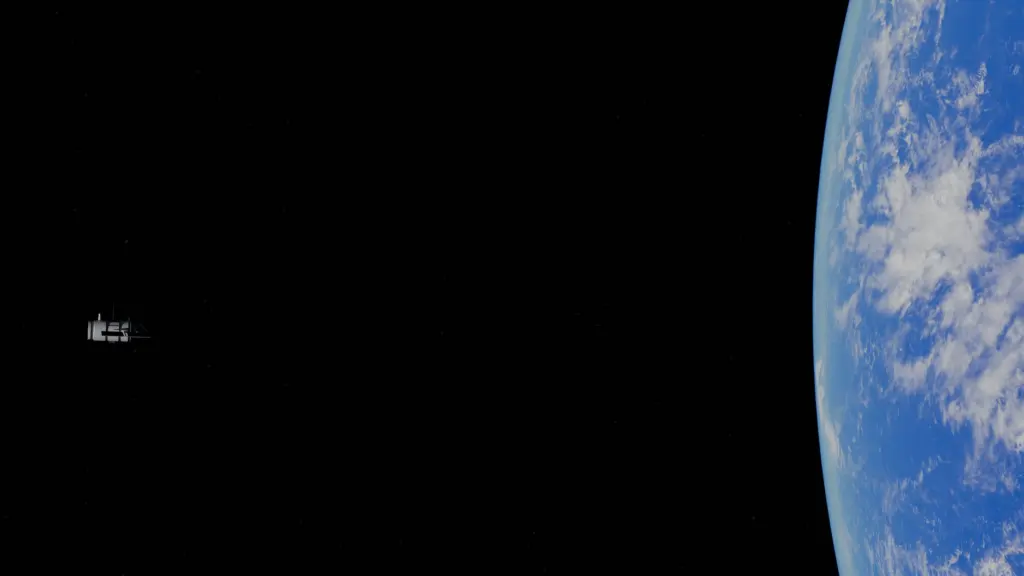
A rocket climbing from the ground passes through very different air at each height. The layers of the earth atmosphere, from the surface up, are the troposphere, stratosphere, mesosphere, thermosphere and exosphere, and they are defined by temperature trends, not by sharp edges.
Atmosphere data comes from repeated measurement, and the scientific method steps explained in the science concepts hub show how measurements become explanations. For the solid planet beneath the air, see Inside Planet Earth: The 7 Layers Explained — From Crust To Inner Core (2026 Guide) – Ricecatalyst.
How the layers are defined
The Met Office defines atmospheric layers according to changes in temperature with altitude. Each layer is a stretch of air where temperature keeps trending in one direction, and a boundary sits where that trend changes. The boundaries are not precisely fixed, so treat every height below as an approximate guide, not a hard line.
The table sets the layers side by side, from the ground upward, with what each one means for weather, flight and satellites.
| Layer | Approximate top of layer | Temperature trend with height | What it means in practice |
|---|---|---|---|
| Troposphere | About 9 km to 17 km, depending on latitude and weather | Colder with altitude | Nearly all weather happens here, and most aeroplanes fly here |
| Stratosphere | About 50 to 55 km | Warmer with altitude | Holds the ozone layer, which absorbs ultraviolet radiation |
| Mesosphere | About 80 to 85 km | Cooling toward the top, as low as -100°C | Home of noctilucent clouds, the highest clouds on Earth |
| Thermosphere | Thermopause at 500 to 1000 km, varying by location, time and season | Warmer with altitude | Aurorae occur here, and the International Space Station orbits here |
| Exosphere | No well-defined upper limit | — | Extremely sparse air that merges with interplanetary space; artificial satellites are found here |
Figures in the table come from the Met Office’s explanation of Earth’s atmosphere.
Common misunderstandings about the layers
Most mistakes come from picturing the atmosphere as one smooth gradient. The layers exist precisely because the pattern changes with height, and four assumptions in particular cause trouble.
- “Higher always means colder.” Temperature falls through the troposphere, rises through the stratosphere, then falls again toward the top of the mesosphere. Never extrapolate a temperature from one layer into the next.
- “A very hot layer must feel hot.” Air molecules in the thermosphere might have energy equivalent to a temperature of over 1,500°C, yet the Met Office notes the thermosphere would not feel hot to the touch, because the air is so thin. Temperature here describes molecular energy, not heat you would sense.
- “The ozone layer is a separate shell.” It is a region of relatively high ozone concentration, roughly 15 to 35 km in altitude, sitting inside the stratosphere. Layer names come from temperature trends; the ozone layer is named for its chemistry.
- “Aircraft and weather balloons use the same air.” Most aeroplanes fly in the troposphere, while weather balloons sent to capture atmospheric data typically reach somewhere in the stratosphere before bursting. Balloon soundings therefore sample the layer above the one most flights use.
Troposphere: where weather happens
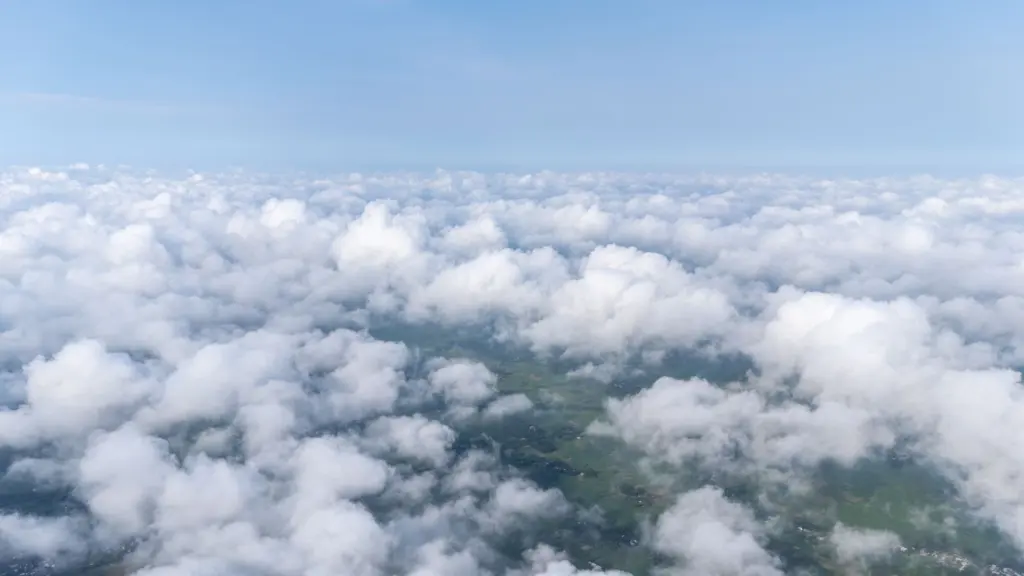
The troposphere extends from the surface up to between about 9 km and 17 km altitude, depending on latitude and weather conditions, according to the Met Office. It contains about 75% of the mass of the entire atmosphere, and nearly all weather takes place within it.
Air in the troposphere becomes colder at higher altitudes up to its upper boundary, the tropopause. For anyone trying to understand clouds, storms or the conditions at ground level, this is the layer to focus on. Its depth is not constant, so any single height for its top is only a rough guide.
Stratosphere and the ozone layer
Above the tropopause lies the stratosphere, which extends up to about 50 to 55 km altitude. Air temperatures in the stratosphere increase with altitude, unlike in the troposphere. That change of direction is what marks the tropopause as a boundary in the first place.
The stratosphere matters to life on the ground because of the ozone layer it contains. According to the Met Office, the ozone layer absorbs ultraviolet radiation from the Sun, which would otherwise be harmful. It is the layer to remember when the question is about protection from the Sun rather than about weather.
Mesosphere: thin, cold and rarely visible
The mesosphere extends up to about 80 to 85 km altitude. Temperatures fall toward its top, reaching as low as -100°C, so it reverses the warming trend of the stratosphere below it.
Its best-known feature is a cloud type. Noctilucent clouds are rare, and they are the highest clouds found on Earth. If a cloud is being described as sitting far above the weather, it belongs to this layer.
Thermosphere: hot molecules, very thin air
The thermosphere’s upper edge, the thermopause, is found at an altitude of between 500 and 1000 km depending on location, according to the Met Office. The same source describes how the temperature rises with altitude through this layer.
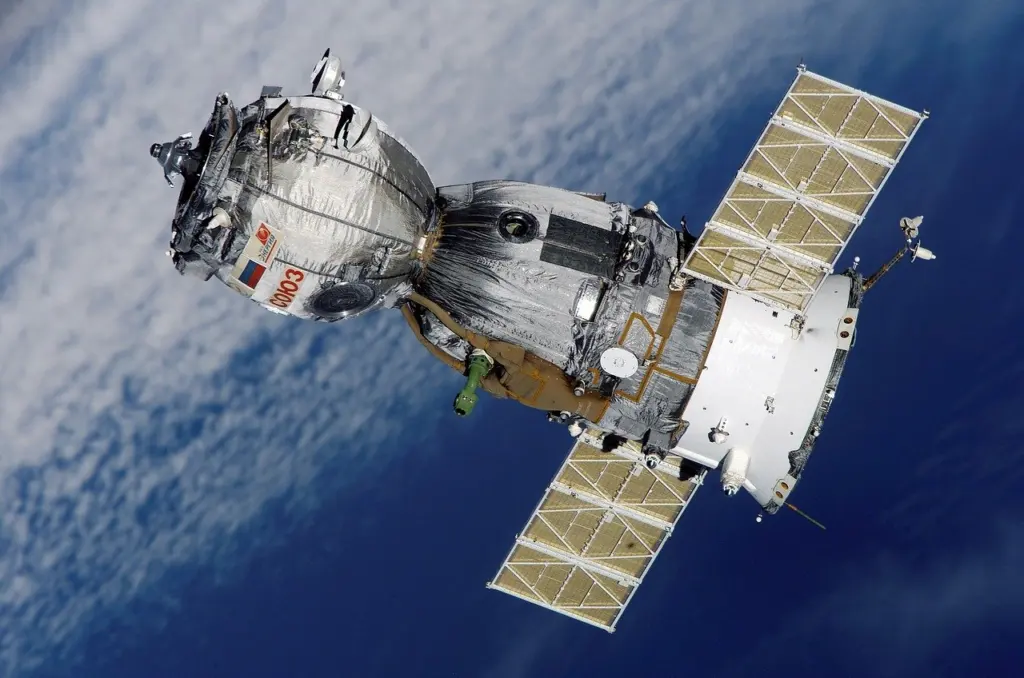
Two visible things happen here. Aurorae typically occur in the thermosphere, and many satellites orbit here, including the International Space Station. For satellite operators and anyone watching the northern or southern lights, this is the working layer of the upper atmosphere.
Exosphere and where space begins
Space begins at a line, not at the end of the air. The Met Office places the line marking the boundary of outer space at 100 km altitude, in the lower thermosphere. Because the thermopause is at 500 to 1000 km, a spacecraft can be in space and still be inside the thermosphere, which is exactly the situation of the International Space Station.
The exosphere is the outermost layer, and it doesn’t really have a well-defined upper limit, merging gradually with interplanetary space. Its air is so sparse that molecules may travel hundreds of kilometres before they hit anything. The only other things found in the exosphere are artificial satellites.
What the air is made of
By volume, the Met Office gives the major gases as nitrogen at about 78%, oxygen at about 21% and argon at about 1%. Carbon dioxide is a trace gas at about 416 ppm. Because air is a mixture of gases, the page States Of Matter For Kids: A Fun, Simple Guide With Examples (2026) – Ricecatalyst is a helpful primer on how gases behave.
Frequently asked questions
| Question | Answer |
|---|---|
| How much water vapour is in the atmosphere, and where is it? | The atmosphere also contains water vapour at a concentration of up to 3%, varying over time and place. According to the Met Office, 99% of all the water vapour in the atmosphere is found in the troposphere. |
| Why is there less oxygen at high altitude? | The overall pressure of the atmosphere falls with altitude, so there is less oxygen available the higher you go, as the Met Office explains. |
| Are the layer boundaries fixed heights? | No. Layers are defined by temperature trends, and the boundaries are not precisely fixed. The troposphere’s depth varies with latitude and weather conditions, and the thermopause varies with location, time and season, per the Met Office. |