
A parent opens a kit with a long materials list and wonders whether it is all necessary. For 1st grade science fair projects it is not: one simple experiment, repeated with a single change, is enough.
The misunderstandings below explain why, and the project ideas that follow fit the science fair project steps a first grader can manage. Families with an older child can compare the approach in 8th Grade Science Fair Project Ideas: 12 Easy, High-Impact Experiments for 2026 – Ricecatalyst, and those with a younger one can look at Preschool STEM Activities That Spark Curiosity: Easy, Hands‑On Projects For Little Learners (2026) – Ricecatalyst.
What a first grade science fair project actually requires
A first grade project needs a question, a guess, a test and a record of what happened. It does not need special equipment. Little Bins for Little Hands points out that not every science activity needs a full lab setup, and that quick investigations need very little preparation. The same page describes a fair project as a simple sequence: start with an experiment, repeat it, change one variable and record the results.
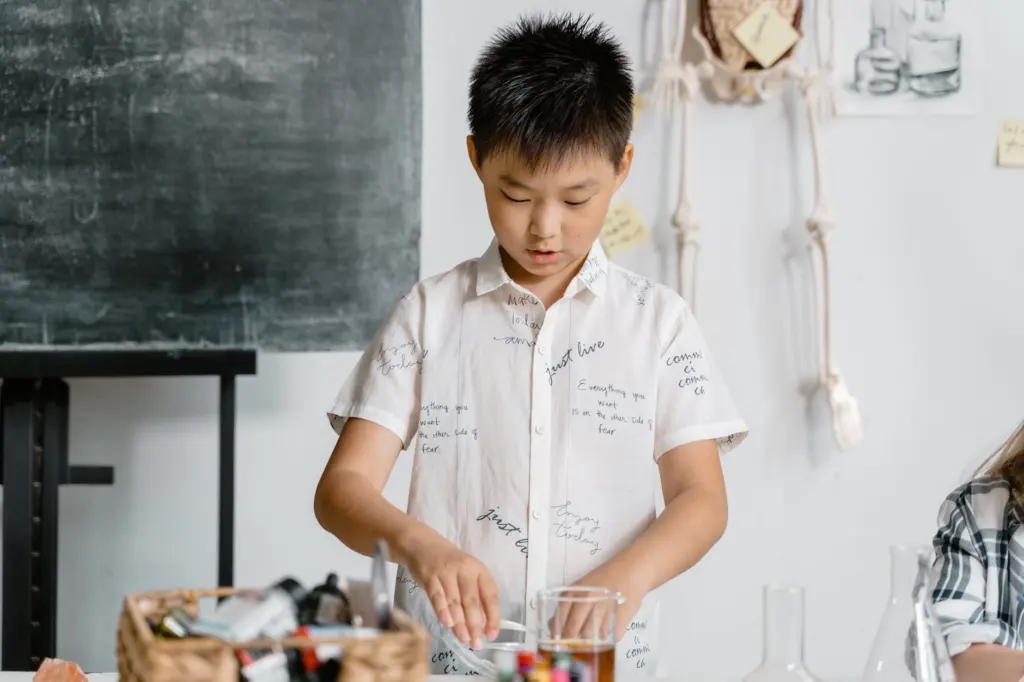
That sequence matters because it is where the learning happens. Repeating an experiment and changing one factor at a time helps children understand cause and effect. A child who swaps one object, one location or one material and then compares results has done real science, even if the experiment itself is a familiar classroom activity.
The table sets the most common misunderstandings against what the evidence supports.
| Common misunderstanding | What works instead | Planning use |
|---|---|---|
| The project needs a full lab setup. | Quick investigations need very little preparation. | Choose an activity that uses things already in the house, so setup does not eat the time meant for testing. |
| The experiment must be brand new. | Start with an existing experiment, repeat it, change one variable and record results. | Pick from a ready-made list, such as the 15 primary experiments for grades K-3 on the EIA teacher page, and put the child’s own change on top. |
| Changing several things makes a project more impressive. | Changing one factor at a time builds understanding of cause and effect. | Decide the single change before starting, and write it on the record sheet. |
| A hypothesis is advanced vocabulary. | It is a prediction: what do you think will happen? | Ask the child for a guess aloud, then write it down in their words before the test. |
The guidance in this table draws on Little Bins for Little Hands and the U.S. Energy Information Administration’s science fair experiments page for teachers.
Low-prep project ideas for first graders
The EIA teacher page lists primary experiments for grades K-3, courtesy of the National Energy Education Development Project, including Sprouting Seeds, Static Power, Melting Ice, Sun and Shade, Changing Colors and Water Maker. Little Bins adds quick starter experiments such as a baking soda balloon, magic milk, a popsicle stick catapult and a cloud in a jar. The ideas below draw on both lists and keep the setup light.
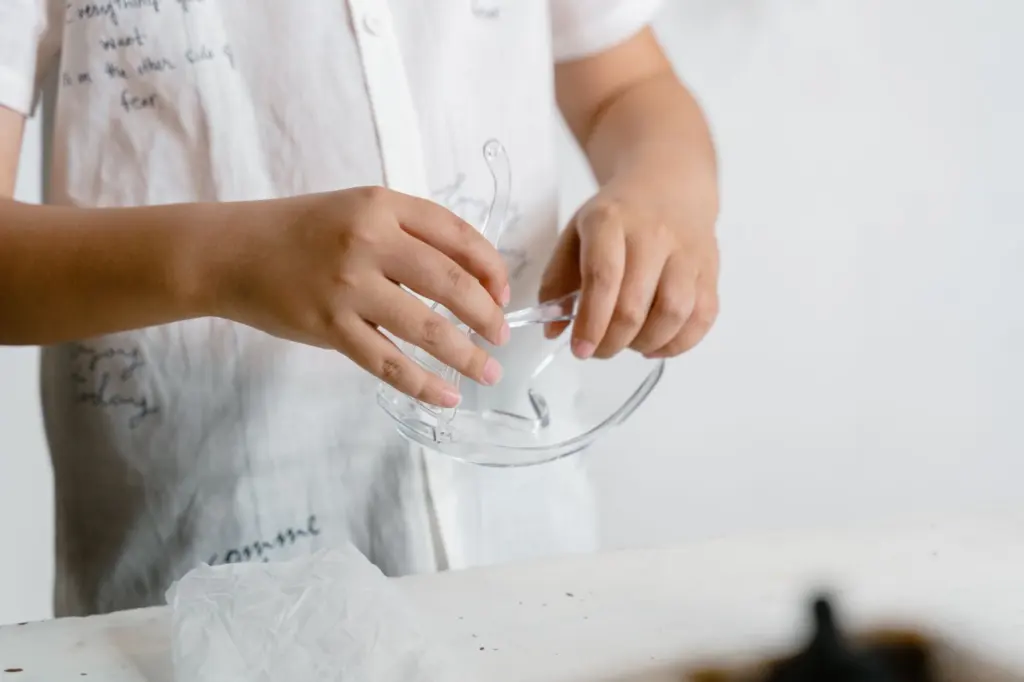
- Sink or float. The child predicts which objects will sink or float, then tests each one. Little Bins notes that the activity shows how density changes whether objects sink or float. It suits children who like sorting and guessing.
- Sprouting seeds. Listed by EIA and described by Little Bins as a way to watch how living things grow and change. The one change could be where the seed cups sit. It suits a family that can check on the cups each day.
- Static power. An EIA primary experiment. The child predicts what happens, tries it and draws the result. It suits a child who enjoys a surprising outcome.
- Sun and shade. Another EIA primary experiment. Compare the same thing in two places and record any difference. It works well when the question is simply “what changes?”
- Melting ice. From the EIA list. Compare ice in two conditions and note what the child sees. It suits a project that needs a quick, visible result.
- Changing colors. Also from EIA. The child guesses the outcome first, then records the actual colors with crayons or photos.
- Baking soda balloon. A Little Bins quick starter. It suits a child who wants something dramatic, but an adult should run it once first so the child’s own test goes smoothly.
- Magic milk. A Little Bins quick starter with a strong visual result, which makes it easy to photograph for the display.
- Popsicle stick catapult. A Little Bins starter that invites a clear single change, such as altering one part of the build and comparing results.
- Cloud in a jar. Listed by Little Bins among its starter experiments. It suits children who like observing and describing.
Choose the idea whose materials are already at home, then add one change the child can describe in a sentence. Sink or float and sprouting seeds are the safest bets for a child who has never done a project, because both give the child plenty to predict and record without much adult steering.
Turning an activity into a hypothesis
A hypothesis is a prediction the child can say out loud, and the experiment is the test of it. Little Bins breaks the scientific method for kids into five steps, and they fit a first grade project closely:
- Ask a question. Keep it small enough for one activity.
- Make a prediction. Little Bins frames it as “What do you think will happen?”
- Test it. Run the activity and repeat it, changing one thing.
- Observe. Look, draw and write what actually happens.
- Draw a conclusion. Compare the result with the guess.
The common pitfall is treating a wrong guess as a failed project. It is not: the conclusion is simply the comparison between guess and result, and a surprise gives the child something more interesting to explain. An elementary project rubric on Scribd asks for a hypothesis or explanation section that states the expected results, so the child’s written guess already has a place on the display.
Parent support checklist
The goal of parent support is to make the testing possible while leaving the thinking to the child. Little Bins notes that printable investigation cards can help children observe changes, compare results and record observations, which is the same job a parent can do with a plain sheet of paper.
- Let the child choose and guess. Offer a few ideas from the list above, then write the child’s prediction word for word.
- Prepare the space, not the answer. Gather materials in one place and run the activity once yourself beforehand if it involves a reaction or a build.
- Agree on one change. Name it before testing begins so the comparison stays fair and the child can explain it later.
- Set up a record sheet. A detailed logbook of observations and data collected during the experiment is part of a well-organised project. For a first grader that means dated drawings, ticks or a few words.
- Take photos while testing. They become the labeled photos on the display board.
- Resist polishing. A board that looks adult-made hides the child’s own work, so accept uneven handwriting and wobbly drawings.
Presenting the project
A first grader presents best with a simple display and a short spoken story told in the order the work happened. The Scribd overview of the parts of a science fair project describes a visual display board showing the project through labeled photos and diagrams, alongside a one-page abstract and the logbook of observations.
Building the display board
Arrange the board in the same order as the five steps: the question, the child’s guess, what was done, and what happened. The elementary rubric asks for an introduction or abstract that states the topic and the question or purpose, and a hypothesis section that states the expected results. Use the child’s photos and drawings under each heading, and label every picture so a visitor can follow without an adult explaining.
Practising the talk
Have the child tell the story aloud using the board as a prompt: what they asked, what they guessed, what they changed and what they saw. Practise by asking a friendly judge’s question such as “How did you test that?” Short, honest answers drawn from the logbook are better than memorised paragraphs.
Frequently asked questions
| Question | Answer |
|---|---|
| Which projects work when time is short? | Little Bins describes baking soda balloon, magic milk, popsicle stick catapult and cloud in a jar as quick starter experiments, and notes that quick investigations need very little preparation. |
| Where can teachers find a ready-made list of experiments? | The EIA’s science fair experiments page links to energy experiments from the National Energy Education Development Project, including a primary list for grades K-3. |
| Does the display need an abstract? | Project guides describe a one-page abstract, and the elementary rubric asks for an introduction or abstract naming the topic and the question. For a first grader, one or two plain sentences can serve that purpose. |
| Should a first grader’s board include graphs? | The rubric recommends graphs, charts and other visuals to display findings clearly. A simple hand-drawn chart of results is a suitable version. |