

Winning science fair projects are scored against a rubric that rewards a testable question, repeated trials, clear data and a student who can explain the work, not a flashy build.
Use this guide alongside the science fair project steps in the teaching hub, then match the rubric language below to your own plan.
What judges score
Judges at the Brookhaven National Laboratory science fair score projects on how well they follow the scientific method or engineering process, using a rubric that runs from 4 (highest) to 1 for each criterion. The Society for Science takes a points approach for ISEF, where science judging splits 100 points across the research question, design, execution, creativity and presentation. Category judges at a regional fair use four criteria worth 10 points each, 40 at most: scientific thought or engineering goals, creativity, independent work or skill, and thoroughness or clarity. The wording differs, but all three reward process over product.

| Common belief | What the rubrics reward | Planning use |
|---|---|---|
| A dramatic build wins | Following the scientific method or engineering process, scored from 4 (highest) to 1 per criterion | Spend early effort on the question, variables and procedure before any construction. |
| One clean run is enough | Top investigation score: experiment performed 3 or more times and/or exceptional sample size | Build repeats into the plan from the first day. |
| The poster is the project | ISEF presentation is 35 points: poster 10, interview 25 | Treat the interview as the larger share of the presentation score and rehearse explanations. |
| Results speak for themselves | Top data analysis score: data shown as a table, chart or graphic organizer | Choose a display format for every data set. |
Figures come from the Brookhaven National Laboratory judging rubric and the Society for Science ISEF grand award criteria.
The ISEF weights lead to a practical judgement. Presentation is the largest block at 35 points, and execution and creativity are 20 each. A project with careful bench work but a thin explanation leaves the biggest share of points unclaimed, so plan the explanation as seriously as the experiment.
Choosing a topic judges can score
The fair rules name a sequence of identifying a problem, forming a hypothesis, designing an experiment, collecting data, then analysis and conclusion. A winning topic is one that lets you walk through every stage of that sequence with evidence at each step. The question is the base of the whole chain.
Start with interest, then narrow to a testable question
One educator guide advises that students choose a topic that interests them, then begin preliminary research. Interest keeps you working through repeated trials, and the research tells you whether the idea can be tested with the materials you have. A testable question names what you change, what you measure and what you hold steady. If you cannot say how the answer would be measured, narrow the question until you can.
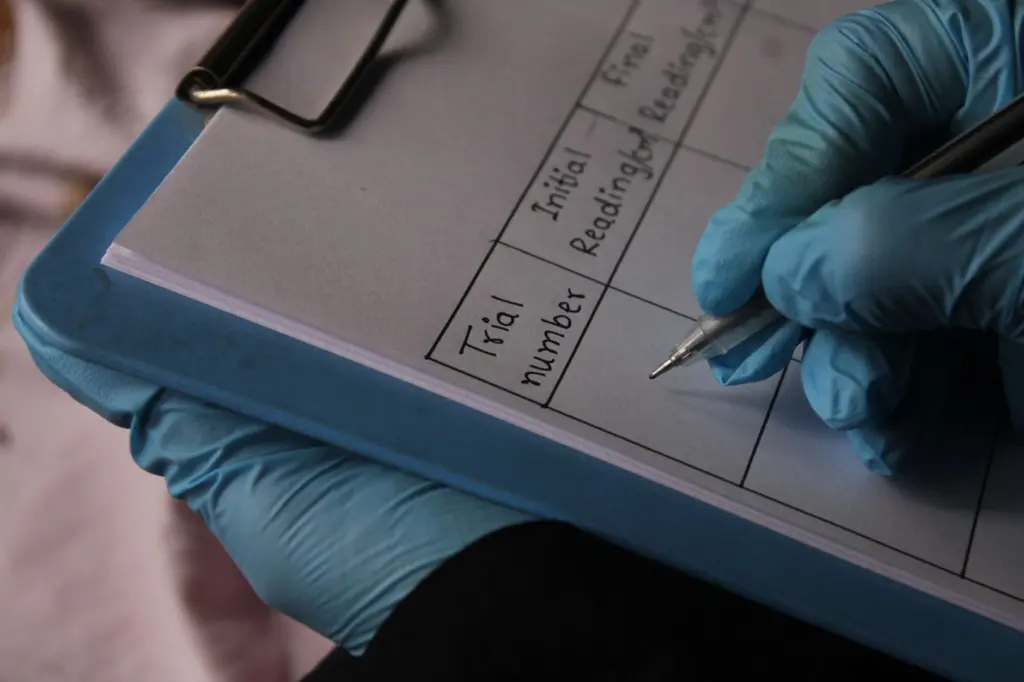
The hypothesis needs reasoning too. The top rubric score asks for a hypothesis thoroughly developed with reasoning, in the form “I think… because…”. A bare prediction without the “because” is the usual gap.
Show originality and relevance
These misunderstandings cost points before the experiment begins:
- Myth: creativity means an exotic subject. ISEF describes a creative project as one that demonstrates imagination and inventiveness, and creativity carries 20 points there. A familiar subject approached with an original design or measurement can meet that description.
- Myth: younger-grade ideas can be reused unchanged at high school level. High school projects require a high level of original thought and development, so adapt the idea with your own variable or method.
- Myth: relevance does not matter. For upper-level competition the same guide says a project should be relevant to current science and technology and should present a benefit to society. If your question connects to a real problem, say so in your explanation.
Making results reproducible
Reproducibility is a scored item, not a courtesy. ISEF lists reproducibility of results within the execution points, and regional category judges ask whether there are appropriate replications or repeated testing. At Brookhaven, the top investigation score goes to an experiment performed 3 or more times and/or with an exceptional sample size. A single impressive run does not reach that level.
The record matters as much as the repeats. The top data collection score at Brookhaven describes a dated sequence of the process, including all observations, data collection and changes, kept in a logbook, journal or project record. ISEF judges are told to examine the student notebook and any special forms. That means a changed method or a surprising trial belongs in the record with its date, not erased to look tidy.
For analysis, the top rubric score expects the data clearly presented in the form of a table, chart, or other graphic organizer. Put every repeat into a table first, then decide which chart shows the pattern. A reader who can trace a chart back to the raw trials can trust it.
Presenting to judges
The display board and the interview do different jobs. ISEF encourages students to design posters in a clear and informative manner, judged on logical organization, graphics and legends, so judges can evaluate the work before speaking to you. A regional fair asks whether the data and test results are clear, accurate and understandable on the project board and abstract. Lead with the question, then show the main result as a labeled graph, and keep the text short enough that the graph does the work.

The interview is where understanding gets tested. ISEF describes it as the opportunity to interact with the finalists and evaluate their understanding, and it carries 25 of the 100 points. Prepare for questions about your controls, your repeats and what you would change, because those are the places a rubric-trained judge will probe. Being able to point at a specific entry in your notebook or a specific point on a chart makes an answer concrete.
Sequence and timing
Work backwards from the fair using the same order the rules give: problem, hypothesis, experiment, data, analysis, conclusion. Finish the question and hypothesis with reasoning first, because every later stage depends on them. Leave the largest block of time for running and repeating the experiment, and reserve the last stretch for the board and interview practice.
One timing rule is easy to miss. Category judges at the regional fair check whether all the work has been completed in the past 12 months. Check your own fair’s window before you begin, since a project that began outside it can be questioned.
Starting points by grade
Younger students can practise the same rubric habits on smaller questions. For fifth graders, Top 15 Easy, Safe Science Fair Projects For 5th Graders (With Steps & Tips) – Ricecatalyst offers safe starting ideas, and sixth graders can browse 50 Fun, Easy Science Fair Project Ideas For 6th Grade (That Teachers Love) – Ricecatalyst. In either case, pick an idea, then add your own variable and a plan for repeats so the project is scored on your thinking rather than on the original activity.
Frequently asked questions
| Question | Answer |
|---|---|
| Can a project use an idea from the internet? | Yes. Regional category judges are told that projects from the internet or other sources are acceptable if clearly acknowledged, but they should be scored lower. |
| Should I mention help from a mentor? | Yes. Judges ask whether the student did the work and acknowledged mentoring, so name who helped and what they did. |
| Is a notebook required? | At the regional fair above, a notebook kept during the project is required for grades 9-12. ISEF judges also examine the student notebook. |
| What if my project runs for several years? | At ISEF, the interview should focus only on the current year’s work, so be ready to separate this year’s contribution from earlier results. |