
A fifth grader wants a volcano but has days, not months, to finish. The answer: pick science fair projects for 5th grade that change one variable, use household materials and give results you can measure.
Parents and teachers who want the wider picture can browse our guidance on science fair project steps alongside the project ideas below.
Common misunderstandings about easy projects
Most trouble with a fifth-grade project comes from a few mistaken beliefs, not from a lack of ideas. The question is whether the project is precise, safe and testable, not whether it looks impressive. Home Science Tools advises making the question precise, safely investigated with available equipment, and quantifiable through experimentation. An easy project that meets those three tests beats an ambitious one that cannot be measured.
| Common belief | What holds up | Planning use |
|---|---|---|
| A harder project impresses judges more | Low- or no-prep experiments you can do almost anytime are a valid starting point, as long as the question is precise and measurable | Choose the simplest project that gives a number to record |
| Changing several things shows more thinking | Choose just one variable to change and test; hold the rest constant | Write down what stays the same before starting |
| The hypothesis has to be a polished answer | A hypothesis is a written prediction of what the experiment will show, made before testing | Write it down early, in one sentence |
| A few test subjects are enough | Too few subjects can skew results because other factors creep in | Use several subjects per condition |
| A school project means every material is safe to handle | Dry ice should never be handled with bare hands | Check each material for a hazard before it reaches the table |
Figures and guidance in the table come from Home Science Tools and WeAreTeachers.
Three habits follow from those corrections, and each one is cheap to adopt:
- Keep the scope small. A narrow question is easier to explain to a judge and easier to finish.
- Predict before testing. The prediction gives the experiment a purpose and the child something to compare results against.
- Protect the comparison. A control and repeated subjects make the result believable, which matters more than flashy materials.
Easy projects to choose from
Easy projects are those rated low- or no-prep, and the simplest ones need only items you probably already have around the house, according to WeAreTeachers. Duration varies: some experiments finish in under an hour, while plant growth experiments may take several days or weeks. Match the project to the calendar, not just to the child’s interest.
Each idea below changes one thing and measures one result. Items involving heat need an adult present.
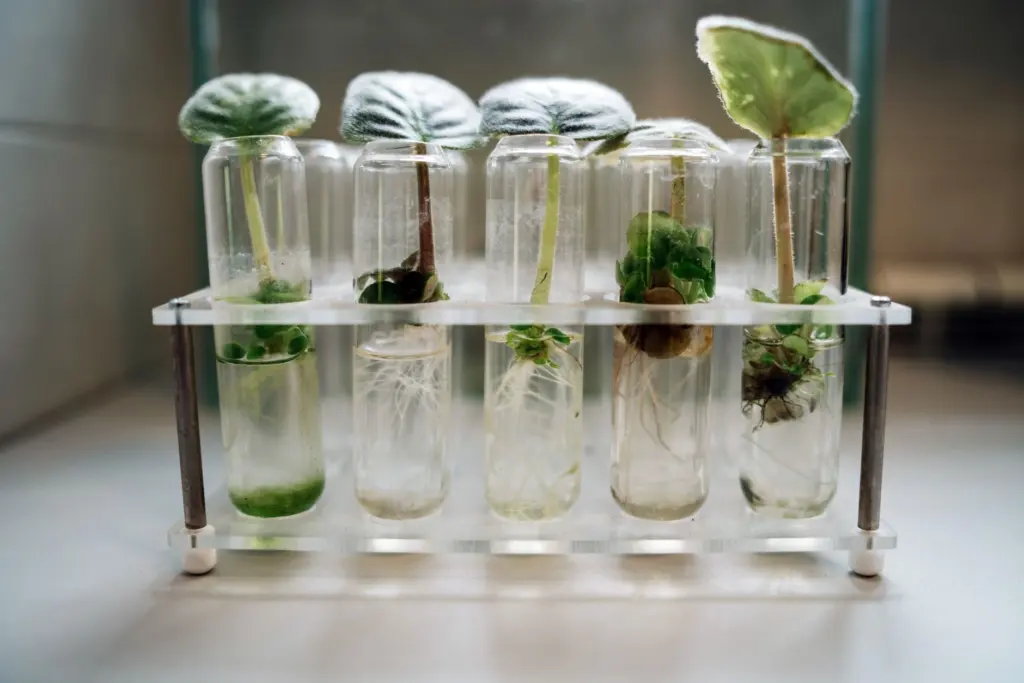
- Plant growth and light: grow bean plants with different amounts of light and measure height.
- Baking soda volcano: keep the vinegar and baking soda amounts identical and compare eruption height across repeated runs.
- Saltwater egg float: change the salt in the water and see when the egg floats. The materials are two clear glasses, water, salt, eggs and a spoon, as listed by Physics Wallah.
- Paper airplane distance: fold different designs, launch from the same spot and measure how far each travels.
- Homemade barometer: build one from a jar, balloon and straw, then log changes beside the local weather.
- Static electricity and materials: charge a balloon and rank fabrics by how strongly small paper bits are attracted.
- Sugar crystal growth: compare how crystals form on string under different cooling conditions. The hot solution calls for an adult.
- Water filtration model: layer sand, gravel and cloth in a bottle and compare how clear the filtered water looks.
- Paper chromatography: compare how marker colours separate on filter paper.
- Solar oven: build a foil-lined box and compare temperature inside and outside. Heat means adult supervision.
- Yeast and sugar fermentation: vary the sugar and watch how far a balloon over the bottle inflates.
- Magnet strength: compare magnets by the distance at which they pick up a paperclip.
- Tooth decay simulation: soak eggs in different drinks and compare shell changes with photos.
- Insulation comparison: wrap identical containers in different materials and compare how fast hot water cools, with an adult handling the water.
- Simple circuit test: compare series and parallel circuits using a battery, wire and bulb.
Pick the one whose result can be recorded as a number or a clear count. Subjective outcomes such as “looks better” are hard to defend in front of judges. The materials most of these need are ordinary: water, vinegar, baking soda, paper, food colouring, test tubes and measuring cups cover a lot of ground.
Materials list and safety
A materials list should name every item the experiment uses, so another student could repeat the work. Write it before shopping and mark any item with a hazard beside it. Keeping the list on the board later also answers a judge’s first practical question.
Adults, gear and hazards
The rule from Physics Wallah is simple: always have an adult present when using heat, sharp objects or electrical equipment. The same source says children must wear gloves, safety goggles or a mask while handling chemicals or hot objects. That covers the solar oven, the sugar solution and the hot-water insulation test above.
Special materials
Dry ice appears in some fifth-grade project lists, and WeAreTeachers cautions that it should never be handled with bare hands. If a project depends on a material like that, ask the teacher before buying it. Stick to the household options in the list above when a safer alternative gives the same measurable result.
Writing a hypothesis
A hypothesis is a written prediction of what the experiment will show, and Home Science Tools recommends writing it down before testing. Start from a precise question, such as how lack of sunlight affects bean plant growth. Then turn the question into a prediction that names what changes and what is measured.
The same source offers a model: a bean plant receiving less light will be shorter, thinner and slower to produce buds. The pattern works for any project: name the thing changed, name the thing measured, and state the expected direction. A fifth grader can adapt it by swapping in the salt, magnet or airplane variable from the project list.
Planning the experiment
A reliable plan rests on a single changing variable, a control and enough subjects. Home Science Tools’ guide to designing a project calls the scientific method the standard for every grade and experience level, adaptable to the child’s age.
- One variable: change only the thing you are testing, such as the amount of light, and keep pots, soil and water the same.
- A control: this group receives normal conditions and acts as the standard of comparison for checking results.
- Enough subjects: the guide’s plant example uses six plants, because too few subjects can skew results.
- Written records: the guide suggests daily or weekly observations in a notebook, with sketches or photographs of the stages. These feed straight into the board.
Plant projects reward patience: the Physics Wallah plant example has the child measure each plant’s height after a week of daily watering. Slower projects need that weekly check built into the schedule, while a quick egg-float test can be finished in a single sitting.
Children who like the measuring and graphing side of this work can extend it with the activities in Math STEM Activities For Middle School: 7 Hands-On Lessons To Boost Problem-Solving In 2026 – Ricecatalyst.
Building a display board
The most commonly used board is a 36 in x 48 in tri-fold poster board, according to a tri-fold board guide. The same guide says the board should carry a clear title at the top, then the question or purpose, hypothesis, materials, procedure, results and conclusion.
Panel layout
A simple layout puts sections on three panels:
- Left panel: question, hypothesis and materials.
- Centre panel: the title and the main visuals.
- Right panel: results and conclusion.
This order lets a reader move left to right through the logic of the experiment. The guide notes that a clear layout helps teachers and judges quickly understand the work, so use the photos and sketches from the notebook to carry the story and keep the text short.
What judges look for
Judges follow the board the way the child followed the experiment. A hypothesis, a visible method and a result that answers the question matter more than decoration. Fairs differ, since science fair committees should provide guidelines for acceptable project categories, so check the rules before choosing a topic. For more on standing out, see Winning Science Fair Projects: How To Choose, Execute, and Present Award-Worthy Research (2026 Guide) – Ricecatalyst.
Timeline from first week to fair day
Project length varies from under an hour to several days or weeks, so the plan below uses phases rather than fixed dates. Stretch the middle phase for slow projects such as plant growth and compress it for quick ones.
- First week, choose and plan: pick the project, write the question and hypothesis, list materials and flag any safety items for an adult.
- Middle weeks, test and record: set up the control and the changed condition, run the experiment with several subjects, and keep the notebook with weekly or daily observations and photos.
- Analysis stretch: compare each condition with the control and decide whether the results match the prediction.
- Final week, board and rehearsal: lay out the tri-fold board panel by panel, then practise explaining the question, method and result aloud.
Leave spare days before the fair for reruns or replacing a broken item. A plant that fails to sprout late in the schedule is much easier to fix when that buffer exists.
Frequently asked questions
| Question | Answer |
|---|---|
| How long does a fifth-grade science project take? | It depends on the experiment. Some can be finished in under an hour, while plant growth experiments may take several days or weeks, so check the fair date before choosing. |
| Can a circuit project use a wall outlet? | No. Use battery power only, never a wall outlet, and keep electronic devices away from water when batteries or circuits are involved. |
| Who decides which project categories are allowed? | The science fair committee. Committees should provide guidelines for acceptable project categories, so read them before settling on a topic. |
| Does a project need a control? | Yes. A control receives normal conditions and gives a standard of comparison for checking the results. |