
| Topic | What is supported | Planning use |
|---|---|---|
| Vehicle type | A battery electric vehicle runs solely from a battery pack. A plug-in hybrid runs on electricity until its battery runs out, then uses gasoline. | Choose battery electric if you can plug in reliably. Choose a plug-in hybrid if you want a gasoline fallback. |
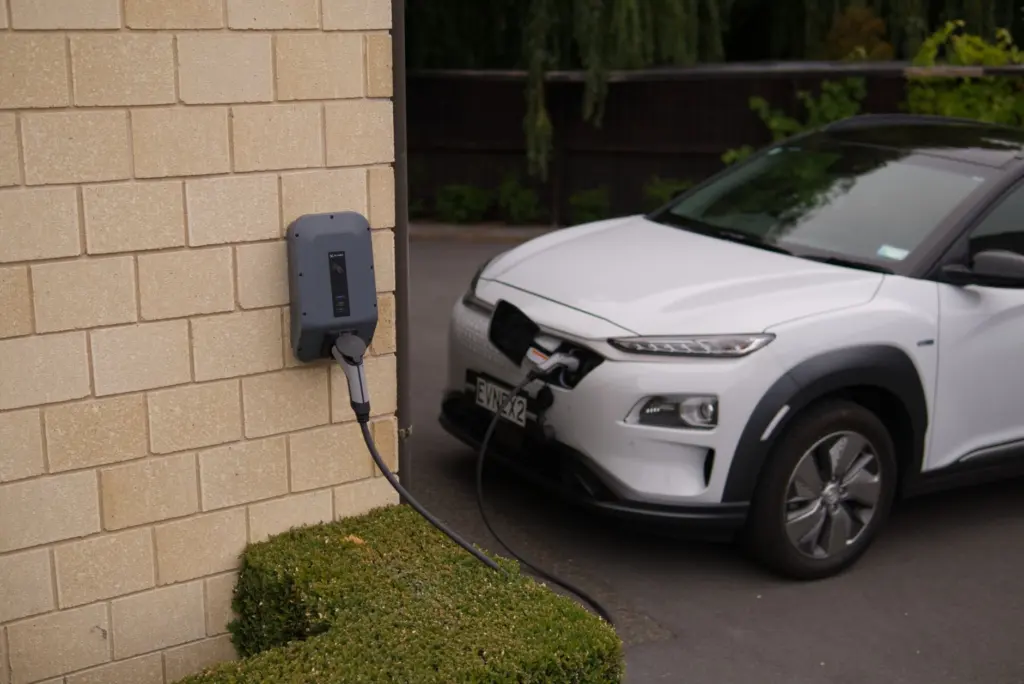
| Charging | Battery electric vehicles receive all their energy from electric vehicle supply equipment (EVSE) that draws grid electricity, at home or at a public station. | Decide where the car will normally plug in before you choose a model. |
| Braking | Regenerative braking captures braking energy in the battery, but in the real world regen is less efficient than coasting. | Let the car coast when the road ahead is clear. Use regen when you need to slow down. |
| Motor type | Permanent-magnet motors are far more efficient at low speed. Induction motors are less efficient at low speeds and can be harder to cool at sustained high loads. | Ask which motor type a model uses if most of your driving is low-speed or sustained heavy load. |
| Moving parts | Electric vehicles have fewer moving parts than conventional gas-powered vehicles. | Expect a simpler drivetrain to look after. |
The motor and driving points come from Car and Driver’s explainer on EV motors. The vehicle-type, charging and moving-parts points come from a Nissan dealer guide to EV components.
How do electric cars work? A battery stores grid electricity, an inverter converts it to alternating current, and a motor turns that into wheel motion. Charging access and driving style shape the day-to-day result.
Electric cars are one example of how technology impacts society. This guide covers the practical consequences first: which type to choose, how charging and upkeep fit into daily life, and what affects range. It then follows the energy from the grid to the wheels.
Choosing between battery-electric, plug-in and hybrid models
A SaveOnEnergy guide says electric vehicles come in three broad types: battery electric (BEV), plug-in hybrid (PHEV) and hybrid electric (HEV). All of them use an electric motor, but they differ in where their energy comes from. That difference matters more to a buyer than any component detail.
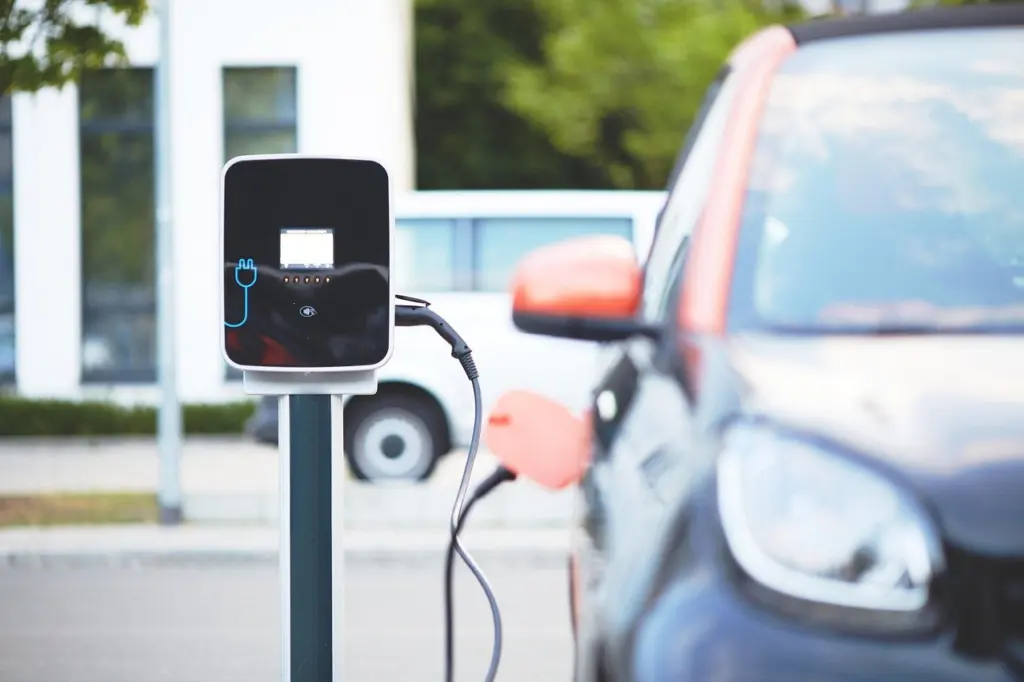
- Battery electric (BEV). This type is powered solely from a battery pack and has zero tailpipe emissions. It suits households that can plug in on a regular basis, because there is no engine to fall back on.
- Plug-in hybrid (PHEV). This type runs on electricity until its battery pack runs out of power, then switches to gasoline. It suits drivers who want electric driving but still need a fuel-burning backup, and it only delivers its electric benefit if the battery is recharged.
- Hybrid electric (HEV). This is the third broad type named by the guide. The explanation below follows the battery electric layout, because its energy path from battery to wheels is the easiest to trace.
Charging and upkeep in daily use
Because battery electric vehicles take all their energy from EVSE connected to the grid, the first practical question is where you will plug in. The Nissan dealer guide notes that you can plug in at home or at a public charging station.
- Home charging. This fits drivers who park in the same place each night, because the car’s battery stores whatever the supply equipment delivers.
- Public stations. These add flexibility for trips away from your usual routine. Treat them as a supplement unless you have no home option.
- Upkeep. SaveOnEnergy says EVs generally require less maintenance than gasoline cars, such as no regular fluid changes. The Nissan guide adds that EVs have fewer moving parts overall. Expect fewer routine service items, not zero attention.
A simpler drivetrain is one side of the decision, and cost, convenience and charging access sit on the other. Weighing benefits against drawbacks in this way is the same skill explored in Smart Classrooms: Balancing The Pros And Cons Of Technology In The Classroom — A 2026 Guide – Ricecatalyst, applied there to classroom technology.
Range and driving style
Range is how far the energy in the battery pack carries the car. Several supported factors influence how well that energy is used, and some are within the driver’s control.
- Coast when the road allows. Car and Driver states that in the real world, regen is less efficient than coasting. When you can see the road clearing ahead, easing off the accelerator and rolling is the better use of energy than braking later.
- Value regen without relying on it. The same source calls regeneration central to extending an electric car’s range. It is part of why stop-and-go driving does not simply waste the energy spent accelerating.
- Match the motor to your driving. Electric motors are most efficient at low rpm and higher load. Permanent-magnet motors need no power to create the rotor’s magnetic field, which makes them far more efficient at low speed. Induction motors are inherently less efficient at low speeds and can be harder to cool at sustained high loads. Mostly low-speed use favours the permanent-magnet type.
- Know what ends a plug-in hybrid’s electric stretch. For a PHEV, the electric range ends when the battery pack runs out of power. After that the car runs on gasoline.
How energy flows from battery to wheels
The energy path in a battery electric car has four stages: grid to battery, battery to inverter, inverter to motor, and motor to wheels. Each stage is handled by a separate component.
Grid to battery
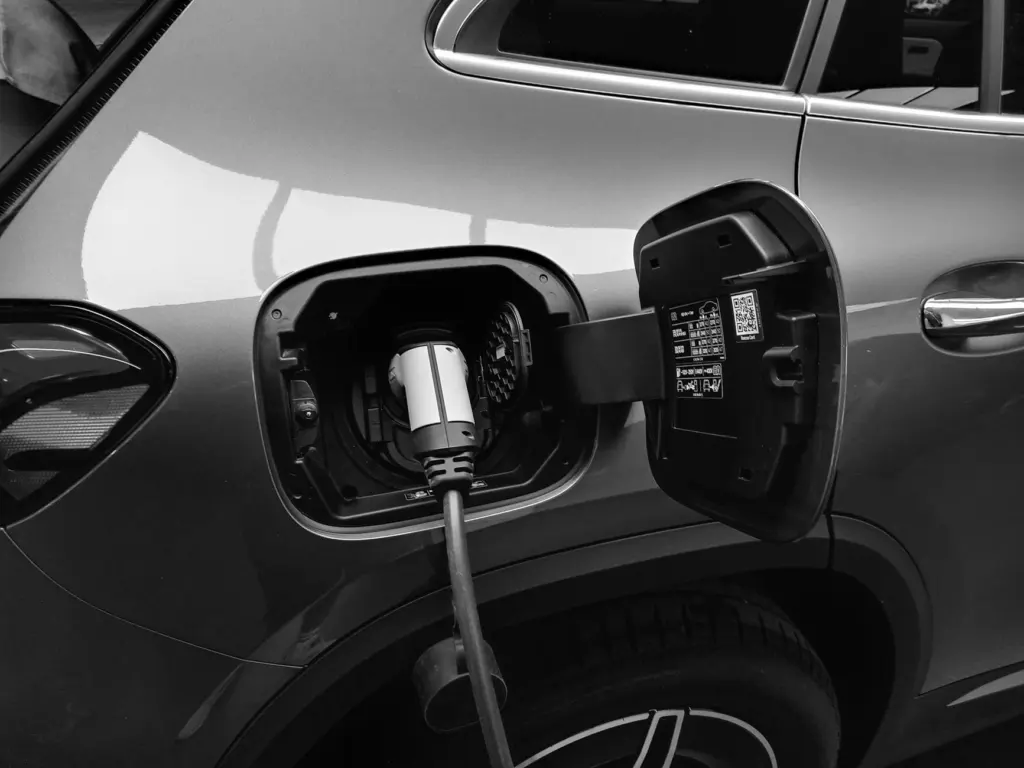
Charging starts with EVSE, the equipment that draws electricity from the grid. The car receives that energy from the charging station and stores it in its batteries. The traction battery pack, a rechargeable high-voltage unit usually described as the lithium-ion battery, stores energy during charging so it can power the car’s electrical components, including the motor.
Battery to motor through the inverter
Batteries are direct-current (DC) devices, so an EV’s power electronics include a DC-AC inverter, as Car and Driver explains. The inverter converts the battery’s direct current into alternating current (AC) for the motor. All three major EV motor types use three-phase alternating current to set up a rotating magnetic field. The power electronics control that field’s frequency and power in response to the accelerator, so pressing the pedal is an instruction to those electronics rather than a mechanical link.
Motor to wheels
The traction motor converts AC electrical power into the mechanical energy that turns the wheels, according to the Nissan dealer guide. The rotating field drives the motor, and its rotor passes torque on toward the drive unit. Most EVs use a direct-drive, single-ratio unit to step the rotating speed down to wheel speed.
Regenerative braking: the flow in reverse
Electric motors are also generators. When you slow down, the motor works as a generator, and this process, known as regenerative braking, creates drag that slows the vehicle. The Nissan guide adds that regenerative brakes capture that energy and store it in the battery. Energy that would otherwise leave as heat during braking goes back into the pack for later use, which is why regen helps range even though coasting can beat it.
Frequently asked questions
Does an electric car have a gearbox?
Most EVs rely on a direct-drive, single-ratio unit rather than a multi-speed gearbox. Car and Driver says a multi-speed transmission could in theory increase range for heavier pickups and SUVs designed to pull trailers. It remains uncommon because of multi-gear spin losses and development costs.
What are the stator and rotor in an electric motor?
The stator is the motor’s stationary outer shell, with a housing mounted to the chassis like an engine block. The rotor is the lone rotating element, analogous to a crankshaft, and it delivers torque to the transmission.
Do electric cars have tailpipe emissions?
A battery electric vehicle is a zero-tailpipe-emission car powered solely from a battery pack. A plug-in hybrid is different, because it switches to gasoline once its battery is depleted.