
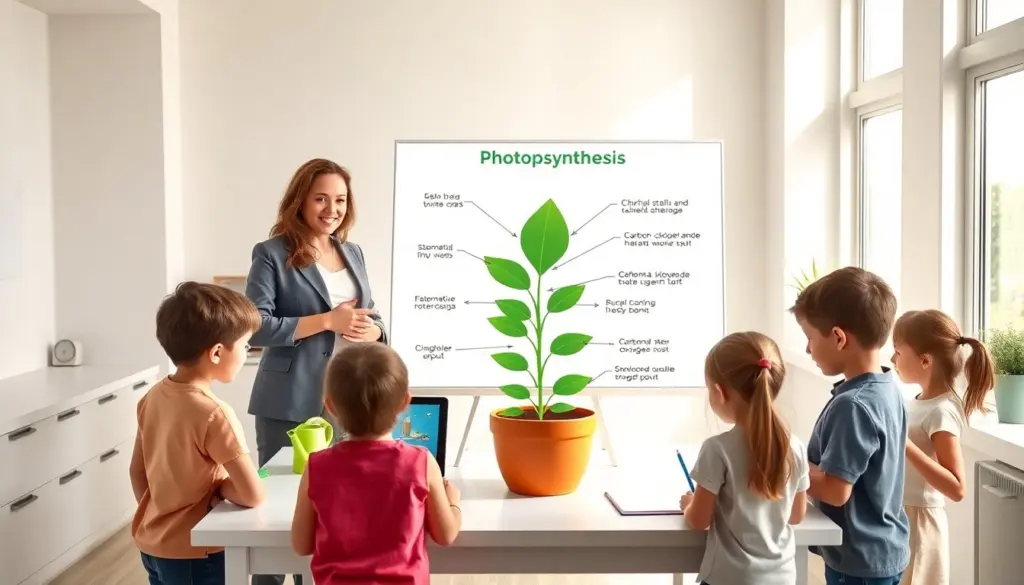
Photosynthesis for kids explains how plants make food from sunlight. This guide gives a clear definition. It shows why the process matters. It lists the plant parts that help. It shows the step-by-step process. It uses simple words and fun examples to help children understand how plants stay alive and how people and animals depend on them.
Key Takeaways
- Photosynthesis for kids means plants use sunlight, water, and carbon dioxide to make sugar for growth and repair.
- Leaves, chlorophyll, stomata, roots, and stems play important roles in photosynthesis by capturing light and moving materials.
- Photosynthesis is essential because it produces oxygen for people and animals while providing energy by feeding plants and those who eat them.
- The step-by-step process starts when chlorophyll in leaves absorbs sunlight, which powers the plant’s food-making by splitting water into hydrogen and oxygen.
- Understanding photosynthesis helps children see how plants grow and why this natural process sustains life on Earth.
What Is Photosynthesis? A Kid-Friendly Definition
Photosynthesis for kids means plants make food using sunlight. The plant takes light, water, and carbon dioxide. The plant turns these ingredients into sugar. The plant stores sugar in leaves and stems. The plant uses sugar for growth and repair. Children can think of a plant as a tiny kitchen. Sunlight acts like the stove. Leaves act like the pots. This short definition helps children name the main idea and the main parts.
Here is a simple sentence children can remember: plants make their food from sunlight so they can grow. You can also show a picture of a plant with arrows pointing to the sun, roots, and leaves to make the idea more visual. Using the phrase “photosynthesis for kids” when teaching helps keep the language simple and focused on the basics.
Why Photosynthesis Matters — For Plants, Animals, and People
Photosynthesis for kids matters because it feeds life on Earth. Plants make sugar for their own use. Animals eat plants and gain energy. People eat plants or animals that ate plants. Photosynthesis also releases oxygen into the air. People and animals breathe this oxygen. Forests and gardens keep air clean by making oxygen. Farmers count on photosynthesis to grow food. Scientists study photosynthesis to improve crop yields. Children see the connection when they watch a seed grow into a vegetable.
To make the idea concrete, try these quick examples: a tree in a backyard gives shade and oxygen, a carrot grows because its plant made sugar, and flowers bloom when plants have plenty of light and water. These everyday examples show why photosynthesis matters to plants, animals, and people.
Photosynthesis also helps keep Earth’s climate balanced. Plants take in carbon dioxide, a gas that can warm the planet. When forests are healthy, they store carbon and help regulate temperature. This shows children that protecting plants and trees is important for everyone.
The Parts Plants Use: Leaves, Chlorophyll, and Stomata
Leaves play the main role in photosynthesis for kids. Leaves collect sunlight and hold the parts that do the work. Chlorophyll sits inside leaf cells and captures light. Chlorophyll gives leaves their green color. Stomata are tiny openings on the leaf surface. Stomata let carbon dioxide enter the leaf and let oxygen exit. Roots bring water from the soil to the leaves. Stem tubes move water and sugar between roots and leaves. Each part has a clear job in the food-making process.
Think of the plant like a factory: leaves are the solar panels and workstations, chlorophyll is the worker that catches light, stomata are the doors that let gases in and out, roots are the pipes that bring up water, and stems are conveyor belts that move food and water. Showing this comparison helps children remember each part’s role.
Try a simple activity: look at a leaf with a magnifying glass to spot veins and tiny hairs, and rub a leaf on paper or hold it up to the light to see how it is thin and built to catch sunlight. These small observations make photosynthesis for kids more real and exciting.
The Photosynthesis Process — Step By Step Overview
This section breaks photosynthesis for kids into clear steps. Each step shows who does what and why it matters. The steps link the plant parts and the ingredients to the final products.
Before the steps, remember the three main ingredients: sunlight, water, and carbon dioxide. The two main products are sugar (food for the plant) and oxygen (released into the air). Saying those three and two items aloud helps children keep the process in mind.
Light and Chlorophyll: How Sunlight Powers Food Making
Sunlight hits the leaf. Chlorophyll absorbs the light. Chlorophyll then stores light energy in short-lived molecules. The plant uses that energy in the next step. This energy lets the plant split water into hydrogen and oxygen. The process happens fast in many cells at once. Sunlight amount affects how fast a plant makes food. On cloudy days the plant makes food more slowly.
To show kids how important light is, you can compare a plant kept in a dark closet (which grows slowly and looks weak) with one placed near a window (which grows well and stays green). This simple comparison demonstrates how sunlight helps plants make food.
Step 1: Water Moves Up From Roots
Water travels from the soil into the roots and up through the stem to the leaves. Tiny tubes inside the stem, called xylem, carry water and minerals. Without water, the plant cannot split the water molecules needed for photosynthesis or keep cells full and healthy.
Step 2: Carbon Dioxide Comes In Through Stomata
Carbon dioxide from the air enters the leaf through stomata. These tiny openings can open and close to save water. When stomata open, carbon dioxide gets in so the chlorophyll can use it to make sugar. Show children how a leaf’s underside may have visible dots or bumps where stomata are more common.
Step 3: Plants Build Sugar
Inside the leaf cells, the plant uses the energy from sunlight, plus hydrogen from water and carbon from carbon dioxide, to make sugar. This sugar, often called glucose, can be used right away or stored in roots, stems, and leaves. Plants use sugar to grow new cells, repair damage, and make seeds and fruits.
Step 4: Oxygen Comes Out
When the plant splits water molecules, oxygen is made and is released into the air through the stomata. That oxygen is what people and animals breathe. This makes plants very important for clean air and healthy life.
Step 5: Energy and Growth
The sugar made by photosynthesis provides energy for the plant to grow taller, make leaves, and produce flowers and fruit. When animals or people eat plants, that energy moves through the food chain. This shows how photosynthesis for kids connects to food and energy in nature.
Simple Experiments and Activities
Try these kid-friendly activities to see photosynthesis in action:
- Leaf and light experiment: place one plant in bright light and one in low light for a week and compare growth.
- Leaf gas test: put a cut aquatic plant in water under light and watch bubbles (oxygen) form on its leaves.
- Seed sprout observation: plant seeds in clear cups so children can see roots and shoots grow over days.
Always supervise kids during experiments and remind them plants need gentle care: water, light, and safe handling.
Quick Review for Kids
Photosynthesis for kids can be remembered with a short rhyme or sentence: “Sun plus water plus air helps plants grow and share.” Teach children that leaves, chlorophyll, stomata, roots, and stems each have jobs in making food. Explain that photosynthesis makes sugar for plants and oxygen for animals and people.
Knowing the basics makes it fun to watch a garden, grow a bean in a cup, or care for a houseplant. These simple activities turn the idea of photosynthesis into a hands-on lesson children will remember. Encourage questions and curiosity—photosynthesis is a great topic for young scientists.