
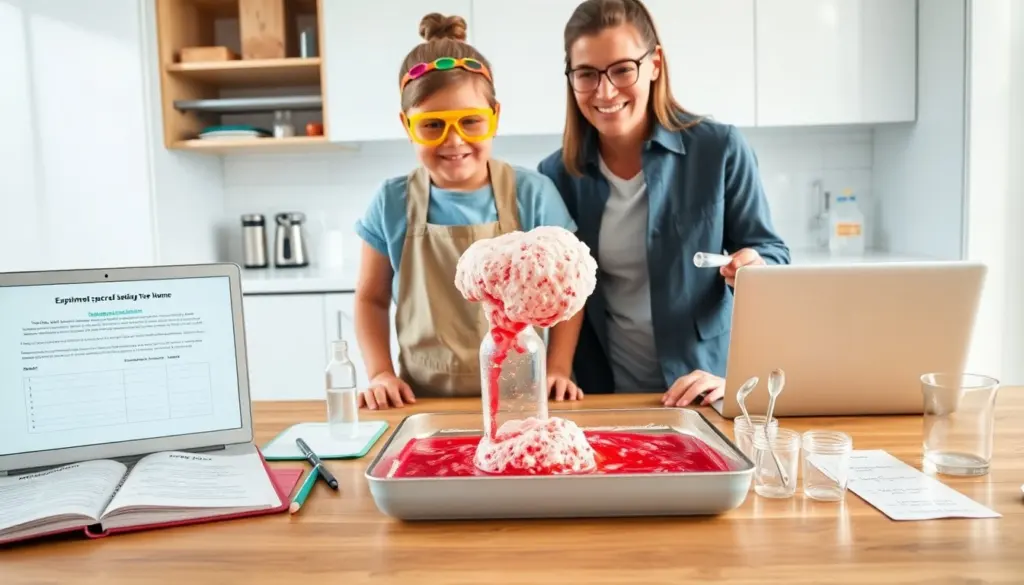
Parents and teachers want easy science experiments to do at home that teach and entertain. This guide lists clear steps, simple materials, and short explanations. It shows how to run each experiment safely. It gives ideas for follow-up questions. The instructions fit common household items and require minimal supervision.
Key Takeaways
- Easy science experiments to do at home use common household items and require minimal supervision, making them accessible and safe for children.
- The baking soda volcano experiment demonstrates chemical reactions and gas production, allowing kids to observe cause and effect visually.
- Invisible ink and pH color change activities teach about acids, bases, and oxidation, encouraging hypothesis testing with everyday materials.
- Varying experiment conditions, such as ingredient amounts or container sizes, helps deepen understanding through comparison and measurement.
- Recording results and presenting findings turn these easy science experiments to do at home into engaging learning projects.
- Safety precautions like adult supervision, protective clothing, and careful cleanup ensure a safe and enjoyable experience.
Baking Soda Volcano: Materials, Step‑By‑Step Procedure, And The Science Behind It
Materials
- Baking soda (sodium bicarbonate)
- White vinegar
- Dish soap (optional)
- Food coloring (optional)
- A small bottle or cup
- Tray or large dish to catch spills
Procedure
- Place the bottle on the tray. 2. Add two to three tablespoons of baking soda to the bottle. 3. Add a drop of dish soap and a few drops of food coloring. 4. Pour about half a cup of vinegar into the bottle. 5. Step back and watch the eruption.
What happens
Baking soda reacts with vinegar. The reaction produces carbon dioxide gas. The gas forms bubbles in the liquid. The bubbles push the liquid out of the bottle. Dish soap traps the gas and makes foam. Food coloring makes the foam look like lava.
Why this helps learning
This experiment shows chemical reactions. It shows gas production and pressure. Children see cause and effect in real time. They learn to measure and record what changes when they alter amounts.
Safety notes
An adult should supervise pouring. The reaction is non-toxic, but it can stain clothing. They should wear old clothes or aprons. They should clean spills promptly. They should not drink any experiment liquids.
How to vary it
They can try different container sizes. They can change the vinegar amount. They can replace vinegar with lemon juice to compare results. They can time the eruption to compare trials.
Keyword use: easy science experiments to do at home appears here to reinforce learning and search relevance. easy science experiments to do at home remain safe and cheap for learners of all ages.
Invisible Ink And pH Color Change: How To Make It, Why It Works, And Safety Notes
Materials
- Lemon juice or milk
- Cotton swabs or thin paintbrush
- White paper
- A light bulb or hair dryer for heat
- Red cabbage or store-bought pH strips (for color change)
Procedure, invisible ink with lemon
- Dip a cotton swab in lemon juice. 2. Write a message on the paper. 3. Let the paper dry fully. 4. Heat the paper near a light bulb or use a hair dryer. 5. Watch the hidden message appear.
Procedure, pH color change with cabbage
- Chop red cabbage and boil it in water for 10 minutes. 2. Strain the liquid to get purple juice. 3. Place small drops of common liquids (soap, vinegar, baking soda solution) on white paper or in small cups. 4. Add a drop of cabbage juice to each sample. 5. Observe color changes.
What happens
Lemon juice contains weak acids. Heat oxidizes the acid residues and darkens them. The darkening reveals the message. Red cabbage contains anthocyanin pigments. The pigments change color at different pH levels. Acid makes the pigment turn red. Base makes the pigment turn green or blue.
Safety notes
An adult should handle boiling water. They should keep heat sources away from children. The cabbage juice is food-safe but can stain surfaces and clothing. Use gloves if staining is a concern. Do not ingest the boiled water used for experiments.
Learning outcomes
This activity teaches about acids and bases. It shows oxidation and a visible pH indicator. Children learn to test hypotheses by changing one variable at a time.
The project fits lists of easy science experiments to do at home because it uses kitchen items and shows clear chemical changes. easy science experiments to do at home can spark questions about everyday chemistry.
Simple Variations And Follow‑Up Questions To Extend Each Experiment
Variations for the baking soda volcano
- Change the baking soda amount and record eruption height. – Use different acids (vinegar, lemon juice) and compare reaction speed. – Place the bottle inside a sand pile to model real volcano shapes.
Variations for invisible ink and pH tests
- Use different household liquids as invisible ink (milk, vinegar, baking soda solution) and compare visibility after heat. – Test more substances with cabbage juice, such as soda or toothpaste, to build a color chart. – Use pH strips to verify cabbage juice results.
Follow-up questions to ask children
- What changed after the liquids mixed? – Which variable made the reaction bigger or smaller? – Why did one ink show up more than another? – How did the indicator color match the pH strip?
How to turn the experiments into short projects
They can make a table and log results for three trials. They can draw before-and-after pictures. They can time each step and graph the times. They can present findings to family members.
Tips for safe play and cleanup
They should collect materials before they start. They should cover work surfaces with newspaper. They should dispose of liquids down the sink with water. They should wash hands and tools after the experiment.
Final encouragement
These activities fit easy science experiments to do at home and require little prep. They let children test ideas and record results. They help build simple lab habits and spark curiosity about everyday materials. easy science experiments to do at home make learning active and fun.