
Black inventions that changed the world often hide inside routine moments, such as stopping at a red light or checking who is at the door. Garrett Morgan’s traffic signal and Marie Van Brittan Brown’s home security system are the clearest examples.
Both fit into the wider question of how technology impacts society: a practical problem appears, an inventor answers it, and the answer becomes everyday infrastructure. Morgan’s gas mask rounds out the set and shows that one inventor can work on very different safety problems.
What each invention solved
Each invention answered a concrete problem rather than a general wish for progress. Rising car traffic needed direction, workers needed to survive a dangerous emergency, and residents needed a way to see and speak to visitors without opening the door. The table below puts the three side by side.
| Invention | Problem addressed | Inventor and date | Lasting effect |
|---|---|---|---|
| Traffic signal | Increasing car traffic needed some direction | Garrett Morgan, 1923 | Drivers share a clear instruction about when to go and when to stop |
| Gas mask | Workers endangered by a pipeline explosion | Garrett Morgan (credited with the invention) | Used in the aftermath of the explosion, where it helped save workers |
| Home security system | Seeing and speaking to visitors without going to the door | Marie Van Brittan Brown, patent filed 1966 and approved 1969 | Pioneered CCTV security systems |
The dates and descriptions come from a roundup of everyday inventions by Black inventors and the Lemelson Foundation’s list of Black inventors and innovators.
Garrett Morgan’s traffic signal
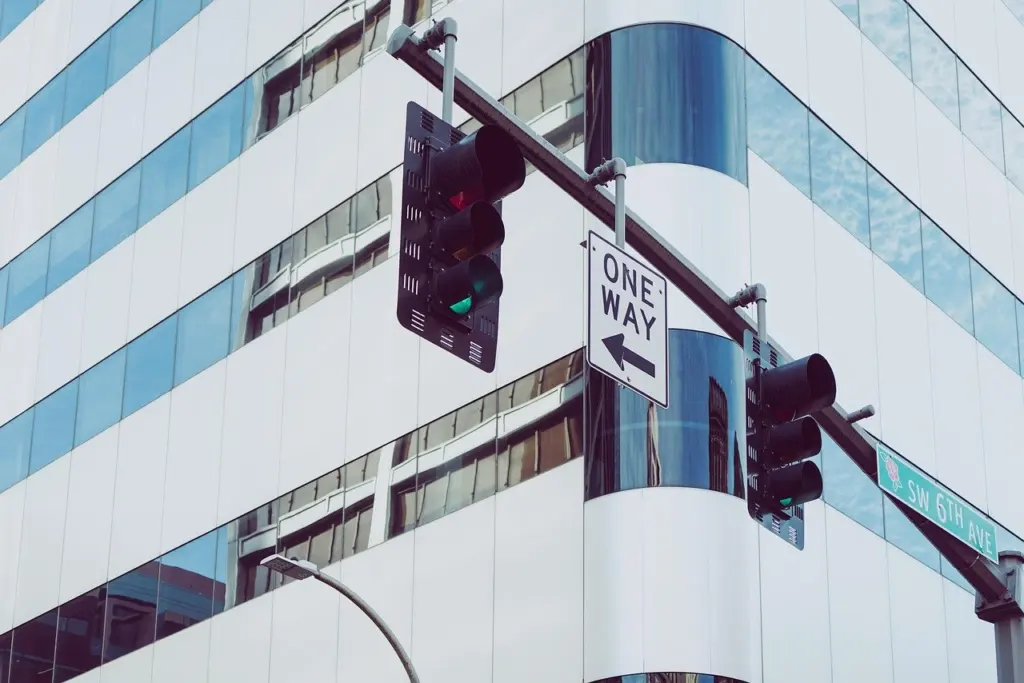
Garrett Morgan invented the traffic light in 1923, according to this profile of everyday inventions. He was born in 1877 to formerly enslaved parents. In Cleveland, where he lived, car traffic was increasing and needed some direction. That is the whole motivation in plain terms: more vehicles meant more chances for drivers to arrive at the same crossing without any shared rule about who goes first.
The principle behind the signal
An intersection is a shared patch of road, and conflicting streams of traffic cannot use it at the same moment. A signal solves that by assigning the space to each stream in turn and telling every driver which turn it is. The device itself is simple. The idea that matters is time-sharing: a clear instruction replaces guesswork between strangers who cannot talk to each other.
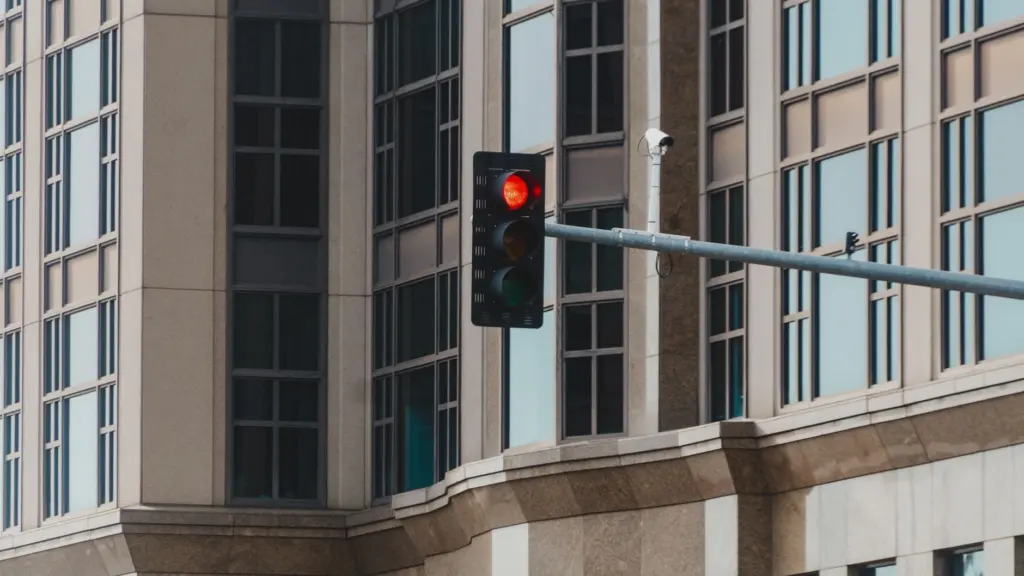
This is also why a traffic light is best understood as a rule broadcast to everyone at once, not just as a coloured lamp. Drivers who have never met all follow the same instruction because they can all see it.
Garrett Morgan’s gas mask
Morgan is also credited with inventing the gas mask, which was put to the test after a pipeline explosion and helped save workers. The wording “credited with” is worth keeping, because it tells a reader that the attribution comes from a historical summary rather than a single legal document.
The principle is protective equipment in its simplest form. A mask lets a person remain in a place where the air is dangerous long enough to do something useful, such as reaching trapped workers. Together with the traffic signal, it shows an inventor working on safety in two different settings: public roads and a hazardous workplace.
Marie Van Brittan Brown’s home security system
Marie Van Brittan Brown invented the first home security system in 1966, according to the Lemelson Foundation. She was working as a nurse when she co-created it with her husband, and the pair lived in New York City. She filed for a patent for a closed-circuit TV security system in 1966, and it was approved three years later.
What the system did
The system combined a recording camera that fed a television with a two-way communication setup. Residents could see a visitor and speak to them without going to the door. That combination of watching and talking is the core idea, and it explains why the system is still recognisable in modern products.
The principle behind closed-circuit viewing
In a closed-circuit arrangement, the camera’s picture goes to specific screens instead of being broadcast openly. That makes it suitable for private spaces: the person inside sees the person outside, and nobody else needs to. Because Brown’s design was patented in 1969 and is described as having pioneered CCTV security systems, it sits at the start of a technology that now covers homes, shops and streets.
Remote observation of a different kind, tracking position instead of watching a doorway, is explained in How Does a GPS Tracker Work? A Clear, Practical Guide For 2026 – Ricecatalyst.
Common misunderstandings about these inventions
Short summaries of inventors often blur details that matter. These are the points most worth keeping straight.
- Invented is not the same as patented. Brown’s system dates to 1966 as an invention, and her patent was filed in 1966 and approved in 1969. Both dates are correct, but they answer different questions: when the work existed and when the patent office approved it.
- Credited does not mean undisputed. Morgan is credited with the gas mask and the traffic light. Read those verbs carefully, and for an exact patent number or filing detail go to patent office records instead of a popular roundup.
- An invention is not always a single product. Morgan’s work covers a street-level rule system and a piece of emergency equipment, which shows that one inventor can work across different safety problems.
- Early does not mean obsolete. Brown’s system is described as pioneering CCTV security, and the same pairing of camera and viewer is still the basis of CCTV systems today.
- Inventors were not distant experts. Brown was a nurse who built her system with her husband, and Morgan was the son of formerly enslaved parents. Both solved problems they could see around them.
How these inventions affect us today
The traffic signal and the security camera now share the same streets. Signals still give drivers a common instruction at crossings, and camera-based security, descended from Brown’s design, watches doorways, buildings and public spaces. Neither is remarkable to most people anymore, which is the best sign that the original idea worked.
For learners, a useful habit is to ask three questions of any invention: what problem it addressed, what principle made the solution work, and what everyday system grew from it. Here the answers are direction for increasing car traffic, a protective mask for a dangerous emergency, and a camera-and-speaker link for the front door. The same pattern of problem, principle and lasting system also appears in newer fields, such as The Future Of Fashion Technology: How AI, Wearables, And Sustainable Tech Will Redefine Style By 2030 – Ricecatalyst.
The best way to keep the three inventions straight is to remember what each one let ordinary people do: move through a crowded street with a shared signal, work through a dangerous emergency, and answer the door without opening it.
Frequently asked questions
| Question | Answer |
|---|---|
| Who invented the first home security system? | Marie Van Brittan Brown, who co-created it with her husband in 1966 while working as a nurse. |
| When was Brown’s patent approved? | She filed in 1966 for a closed-circuit TV security system, and the patent was approved three years later, in 1969. |
| What else did Garrett Morgan invent besides the traffic light? | Credited to Garrett Morgan, the gas mask was used during a pipeline explosion to protect workers. |
| What links Morgan’s and Brown’s inventions? | Each answered a specific safety problem with a system that people could use without special training: a shared signal for drivers, and a way to see and speak to visitors from inside the home. |