
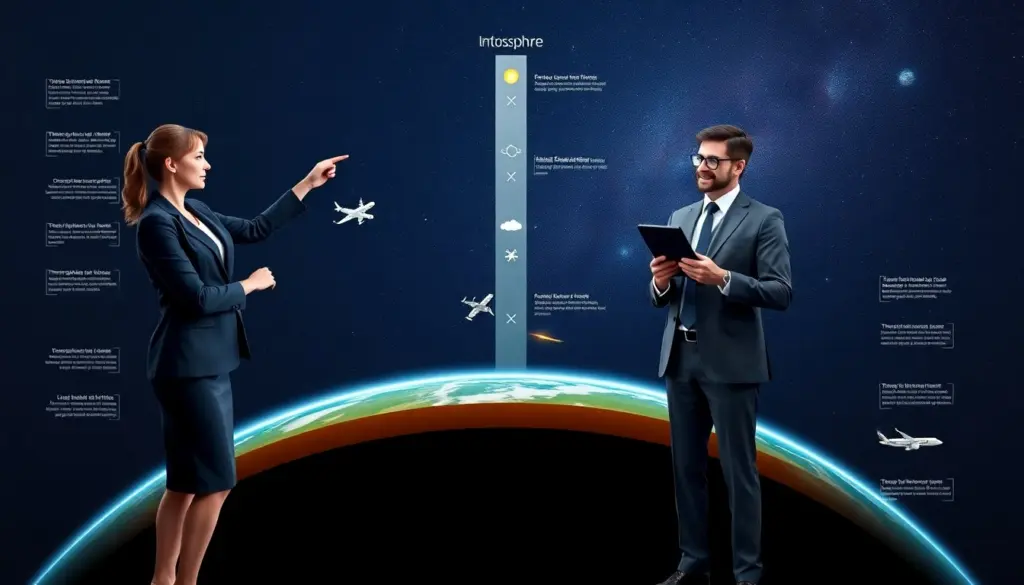
layers of the earth atmosphere form distinct shells that surround the planet. Scientists define these shells by changes in temperature and composition with height. This guide lists the layers, describes how they change with altitude, and explains why the layers of the earth atmosphere matter for weather, flight, and satellites.
Key Takeaways
- The layers of the Earth atmosphere are divided into five main bands: troposphere, stratosphere, mesosphere, thermosphere, and exosphere, each with distinct temperature and composition characteristics.
- The troposphere contains most weather phenomena and water vapor, making it crucial for weather forecasting and aviation planning.
- The stratosphere holds the ozone layer, which absorbs ultraviolet light and stabilizes the air, benefiting commercial flights and protecting life from UV radiation.
- The thermosphere heats up significantly due to solar activity, hosts the ionosphere for radio communication, and contains low Earth orbit satellites and auroras.
- The exosphere represents the boundary to outer space with sparse particles, important for satellite orbits and space missions.
- Human activities and solar events influence the layers of the Earth atmosphere, affecting climate, satellite operation, and weather patterns.
The Five Atmospheric Layers At A Glance
The layers of the earth atmosphere divide the air into five main bands. From the surface outward they are the troposphere, stratosphere, mesosphere, thermosphere, and exosphere. Each layer shows a clear pattern of temperature and density change with altitude. The troposphere contains most weather and nearly all water vapor. The stratosphere holds the ozone layer and stable air that favors flight. The mesosphere cools as altitude rises and hosts meteors that burn up. The thermosphere heats dramatically and contains charged particles that affect radio signals. The exosphere fades into space and holds few particles that can escape into orbit.
People use the layers of the earth atmosphere for practical tasks. Pilots plan routes inside the troposphere and stratosphere. Engineers place satellites inside or above the thermosphere. Meteorologists read layer boundaries to forecast storms. Space agencies track the exosphere when they launch vehicles. Students learn the five layers as a simple map of how air behaves with height.
The layers of the earth atmosphere differ by temperature trend, gas mix, and pressure. This guide uses those three ideas to compare the bands. The troposphere shows temperature decline with height. The stratosphere shows temperature rise because ozone absorbs UV. The mesosphere shows cooling again. The thermosphere shows strong heating from incoming sun energy. The exosphere shows no clear temperature structure because particles rarely collide.
How The Layers Differ: Composition, Temperature, And Altitude
The layers of the earth atmosphere change by how they hold gases, how they warm or cool, and where they sit above sea level. The next sections describe the lower layers first and then the upper layers. Readers will find clear facts about composition, typical altitudes, and key processes that each layer controls.
Lower Layers: Troposphere, Stratosphere, Mesosphere (What Happens Close To Earth)
The troposphere starts at the ground and rises to about 8 km at the poles and to about 18 km at the equator. The troposphere holds about 75 percent of the atmosphere mass and most water vapor. Air pressure and density drop with height inside the troposphere. Temperature falls by roughly 6.5 °C per kilometer on average. Weather and jets operate inside this layer. Convection moves heat upward and forms clouds and storms.
The stratosphere sits above the troposphere and reaches to about 50 km. The stratosphere contains the ozone layer. Ozone absorbs ultraviolet light and warms the air. This warming makes the stratosphere more stable and reduces vertical mixing. Commercial airlines often fly near the lower stratosphere to use steady air and avoid storms. Instruments measure ozone trends here to monitor UV risk to life.
The mesosphere lies above the stratosphere and extends to about 85 km. The mesosphere shows temperature that falls again with height. The mesosphere clears away small meteoroids by burning them in thin air. The air here grows too thin for aircraft but too dense for satellites. Scientists study the mesosphere with rockets and remote sensors to learn how waves from below change temperature and wind.
Upper Layers: Thermosphere And Exosphere (Space Boundary, Satellites, And Radiation)
The thermosphere starts near 85 km and stretches to between 500 and 1,000 km depending on solar activity. The thermosphere heats when high-energy solar particles and X-rays strike the few remaining air molecules. Temperatures can exceed 1,000 °C, but the air feels cold because particles sit far apart. The thermosphere hosts the ionosphere, a charged region that reflects and alters radio waves. The ionosphere helps long-range radio by bouncing signals. The thermosphere also holds low Earth orbit satellites and the aurora that forms when charged particles hit air.
The exosphere begins where the thermosphere thins and continues into space. The exosphere extends from roughly 500–1,000 km out to several thousand kilometers. The exosphere contains mainly hydrogen and helium atoms that escape more easily to space. Satellites in high orbits pass through the exosphere. The exosphere sets the practical boundary between air and outer space for many engineering tasks.
The layers of the earth atmosphere react to the sun and to human action. Solar storms can swell the thermosphere and raise drag on satellites. Pollution can change chemistry in the troposphere and stratosphere. Climate change alters the height and temperature of the troposphere and lower stratosphere. Scientists monitor these shifts with balloons, aircraft, satellites, and ground sensors. These measurements help planners, pilots, and operators reduce risk and adapt systems that work inside the layers of the earth atmosphere.