
Teachers and parents look for science fair project ideas for 6th grade that match skill level and safety rules. This list gives clear, simple projects that use common materials. Each idea states a testable question, a hypothesis, and basic steps. The ideas aim to help students focus on one variable and collect measurable results for a solid presentation.
Key Takeaways
- Science fair project ideas for 6th grade should test one clear variable using safe, simple materials to produce measurable and reliable results.
- Students must state a clear hypothesis, plan controlled experiments, and keep detailed records including data and observations for their projects.
- Choosing projects that match skill level and follow safety rules ensures successful and safe science fair participation.
- Effective projects include a logical procedure, data interpretation, and suggestions for future experiments to stand out to judges.
- Presentation boards should clearly display the question, hypothesis, methods, data, and conclusions, supported by graphs and photos for easy understanding.
What Makes A Great 6th Grade Science Fair Project? Criteria, Scope, And Safety
A great science fair project idea for 6th grade meets clear criteria. It tests one variable. It uses materials that students can handle. It produces measurable outcomes. It fits time limits and budget. It follows school safety rules.
Teachers recommend students choose projects that match their skills. They suggest simple measurements such as time, height, mass, or temperature. They advise avoiding hazardous chemicals and open flames. They recommend adult supervision for electrical components and any heat sources.
Students should state a clear hypothesis that predicts an outcome. Students should plan one independent variable and one dependent variable. Students should include control trials to compare results. Students should repeat trials to improve reliability.
Students must keep a lab notebook. They should record dates, materials, procedures, raw data, and observations. They should use charts or tables to show results. They should calculate simple averages and show units.
Teachers look for projects that demonstrate thinking. They expect a clear question, logical procedure, and interpretation of data. Judges value projects that explain why results matter and suggest one or two next steps. Projects that follow these rules stand out at fairs.
30 Ready-To-Use Project Ideas By Topic (Simple Materials, Clear Hypotheses)
Biology
- Plant light study: Test whether red or blue light makes bean seedlings grow taller. Hypothesis: Blue light will increase height.
- Soil moisture and seed germination: Test which soil holds water best for sprouting. Hypothesis: Loam will produce faster sprouts.
- Yeast respiration: Test how sugar type affects bubble count in yeast. Hypothesis: Glucose will produce more bubbles.
Chemistry
- pH and plant growth: Test whether diluted vinegar affects radish growth. Hypothesis: Acidic water will slow growth.
- Homemade indicator: Test red cabbage juice as a pH indicator with common liquids. Hypothesis: Juice will change color predictably.
- Rust rate: Test which metal coating slows rust in saltwater. Hypothesis: Painted metal will rust slower.
Physics
- Paper airplane design: Test which wing shape flies farthest. Hypothesis: Wider wings fly farther.
- Ramp friction: Test surface types that change toy car speed. Hypothesis: Smooth surfaces let cars go faster.
- Solar oven: Test which box insulation raises temperature most. Hypothesis: Foil plus black lining heats best.
Earth and Environment
- Water filtration: Test sand vs. charcoal filters for clarity. Hypothesis: Charcoal filters clean water better.
- Erosion models: Test how plant cover affects soil loss with water flow. Hypothesis: Plants reduce erosion.
- Microplastics capture: Test which fabrics release more fibers in laundry. Hypothesis: Synthetic fabrics release more fibers.
Engineering and Technology
- Balloon car: Test which wheel size increases distance. Hypothesis: Larger wheels increase distance.
- Insulation test: Test materials to keep liquid warm. Hypothesis: Wool will keep heat longest.
- Catapult angle: Test angle effects on launch distance. Hypothesis: Forty-five degrees launches farthest.
Behavioral and Social
- Memory tests: Test whether background noise affects recall. Hypothesis: Quiet improves recall.
- Reaction time: Test caffeine effects on simple reaction tasks. Hypothesis: Caffeine reduces reaction time.
- Taste perception: Test whether color of cup changes perceived flavor. Hypothesis: Color affects perception.
Food Science
- Yeast bread rise: Test sugar amounts on dough rise height. Hypothesis: Moderate sugar gives best rise.
- Emulsion stability: Test which oil types mix best with egg. Hypothesis: Olive oil will form a stable emulsion.
Energy and Environment
- Wind turbine blades: Test blade shape on power output. Hypothesis: Curved blades produce more rotation.
- Solar panel angle: Test angle effects on voltage. Hypothesis: Panels at sun angle give more voltage.
- Biodegradable test: Test decomposition rates of materials in soil. Hypothesis: Paper decomposes faster than plastic.
Simple Tech and Coding
- Algorithm puzzles: Test whether algorithmic hints reduce solve time. Hypothesis: Hints lower solve time.
- Light sensor test: Test phone sensor response to shade. Hypothesis: Sensor reading drops in shade.
Fun and Quick Projects
- Egg drop padding: Test materials that protect an egg from fall. Hypothesis: Foam cushions reduce breakage.
- Candy chromatography: Test color separation on coffee filters. Hypothesis: Dye components separate by solubility.
- Temperature and bounce: Test how temperature affects ball bounce height. Hypothesis: Warmer balls bounce higher.
Observational
- Local biodiversity count: Test how plant variety changes across locations. Hypothesis: Parks have more species than streets.
- Light pollution: Test star visibility in different neighborhoods. Hypothesis: Rural areas show more stars.
Each idea fits a simple materials list. Each idea states a testable hypothesis. Each idea keeps one clear variable for students to measure. These projects work well for classroom preparation and fair display.
How To Plan, Test, Record Results, And Create A Presentation Judges Remember
Planning
They start by choosing one science fair project idea for 6th grade that interests them. They write a clear question and a short hypothesis. They list materials and estimate time. They plan at least three trials and a control.
Testing
They follow the procedure step by step. They change only the independent variable. They measure the dependent variable with a consistent tool. They repeat trials and note any errors.
Recording Results
They record raw data in tables. They calculate averages and include units. They make simple graphs that show trends. They write short observations that explain patterns or odd results.
Analysis
They compare results to the hypothesis. They state whether data supports or rejects the hypothesis. They suggest one plausible reason for outcomes. They propose one or two next experiments to expand findings.
Display and Presentation
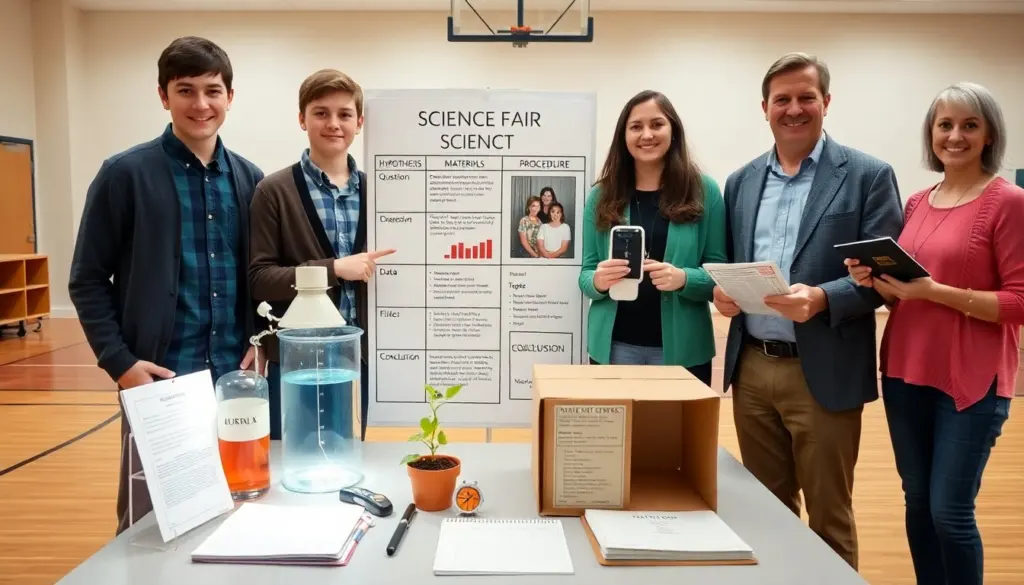
They build a clear board with labeled sections: Question, Hypothesis, Materials, Procedure, Data, Conclusion. They place graphs and photos where they are easy to read. They practice a 2-3 minute talk that explains the project and results.
Judging Tips
They prepare to answer three likely questions: why the topic matters, how they ensured fair tests, and what they learned. They bring a concise handout with key numbers. They show confidence and honesty about errors.
These steps help students turn a science fair project idea for 6th grade into a strong entry. They help judges see the student work and thought clearly.