
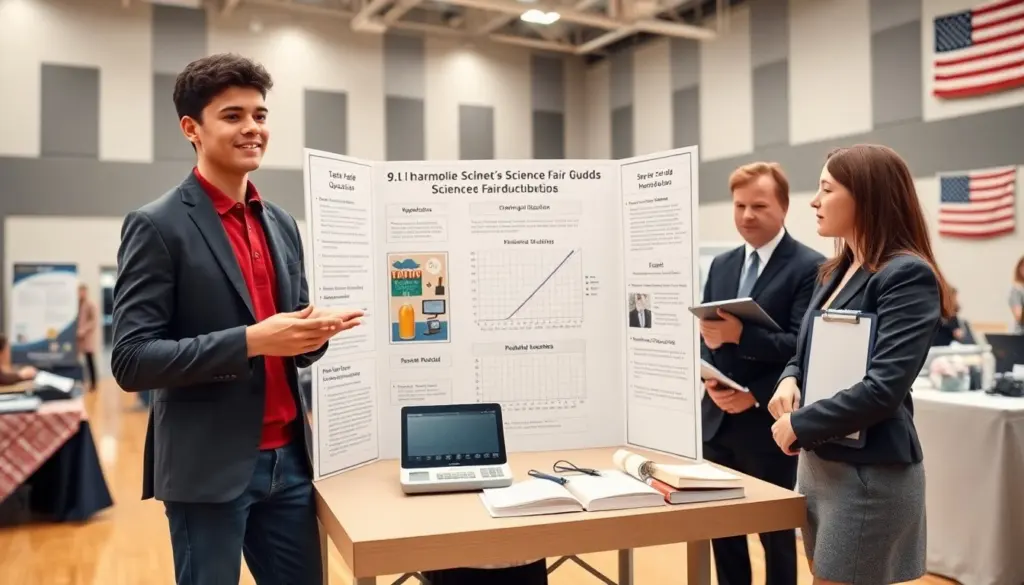
Students who want winning science fair projects must pick a strong question and test it with care. The student should focus on clear methods and repeatable data. The student should record results and explain what the data shows. The student should present the work in a way that helps judges follow the logic and value of the project.
Key Takeaways
- Choose a clear, testable question that addresses a real problem and includes measurable variables to create a strong foundation for winning science fair projects.
- Design and execute a reproducible experiment with detailed methods, consistent measurements, multiple trials, and transparent data recording to ensure reliable results.
- Use simple statistics and well-labeled graphs to present data clearly, helping judges quickly understand and verify your findings.
- Plan a logical and visually accessible presentation that highlights your question, hypothesis, methods, results, and conclusion for maximum impact.
- Prepare concise abstracts, handouts, and a practiced pitch while managing time effectively during the fair to impress judges and enhance the chance of winning.
- Document all safety measures, materials, limitations, and next steps to support reproducibility and demonstrate scientific rigor.
Pick A High-Impact Topic With A Clear, Testable Question
Students who aim for winning science fair projects start with one idea. They list interests and note real problems. They choose ideas that allow measurable change. They write one clear question that the experiment will answer. Example: “Does salt level change seed germination time?” That question names a variable and a measurable outcome.
Students check if the question is original and safe. They search past projects and simple journals. They ask a teacher or mentor for feedback. They narrow the question until it stays focused. A focused question avoids multiple moving parts. It keeps experiment time and materials reasonable.
Students define variables next. They state the independent variable, dependent variable, and controls. They decide on sample size and repeat count. They estimate time and cost. They list materials and any permits.
Students plan for impact. They select a question that connects to local issues or current science. That choice helps judges see relevance. Relevance makes many winning science fair projects stand out. Students explain why the question matters in two sentences. They make the goal clear: test one hypothesis and report data that supports or rejects it.
Design And Run A Rigorous, Reproducible Experiment
Students who pursue winning science fair projects design clear methods. They write step-by-step procedures that another person can follow. They use consistent measurements and record units. They calibrate tools and note calibration dates. They randomize samples when possible. They keep conditions stable for control groups.
Students calculate sample size before they run tests. They run multiple trials to reduce random error. They record raw data in a lab notebook or digital sheet. They time-stamp entries and note any anomalies. They repeat experiments if results look odd. They avoid cherry-picking data and report all trials.
Students use simple statistics to test results. They calculate averages, standard deviations, and basic significance using t-tests or chi-square where appropriate. They present p-values and confidence ranges in plain language. They show graphs that use labeled axes and clear units. A well-labeled graph helps judges check claims quickly.
Students document sources and safety steps. They list reagent grades, model numbers, and supplier info. They attach photos of setups and raw data tables. They include a short section on limitations and next steps. This practice proves the work holds up and lets others reproduce it. Reproducibility strengthens many winning science fair projects.
Present Your Findings Clearly To Impress Judges And Earn Top Scores
Students with winning science fair projects plan their presentation like a short story. They open with the question and why it matters. They state the hypothesis and key methods in one sentence each. They show the main result with one clear graph or image. They speak in plain terms and avoid jargon.
Students design a display board that follows a logical flow. They place title, question, hypothesis, methods, results, and conclusion in order. They use bullet lists and short captions. They keep text size large enough to read at arm’s length. They use color sparingly to highlight data and not distract from the content.
Students write a concise abstract and a one-page handout. The abstract states the question, sample size, key result, and conclusion. The handout gives judges quick access to numbers and methods. Students practice a 60-second pitch that covers why the study matters and what the data shows. They prepare answers for likely questions about controls, error, and next steps.
Students practice live demo steps if the project calls for it. They rehearse handling equipment and timing. They bring backups of slides or photos on a tablet. They maintain a calm tone and make eye contact. They thank the judges and offer the handout.
Students treat time management as part of the presentation. They arrive early to set up and check lights. They leave the booth tidy and store raw data on a USB or cloud link. Clear presentation and solid answers often push projects into the winner circle.