
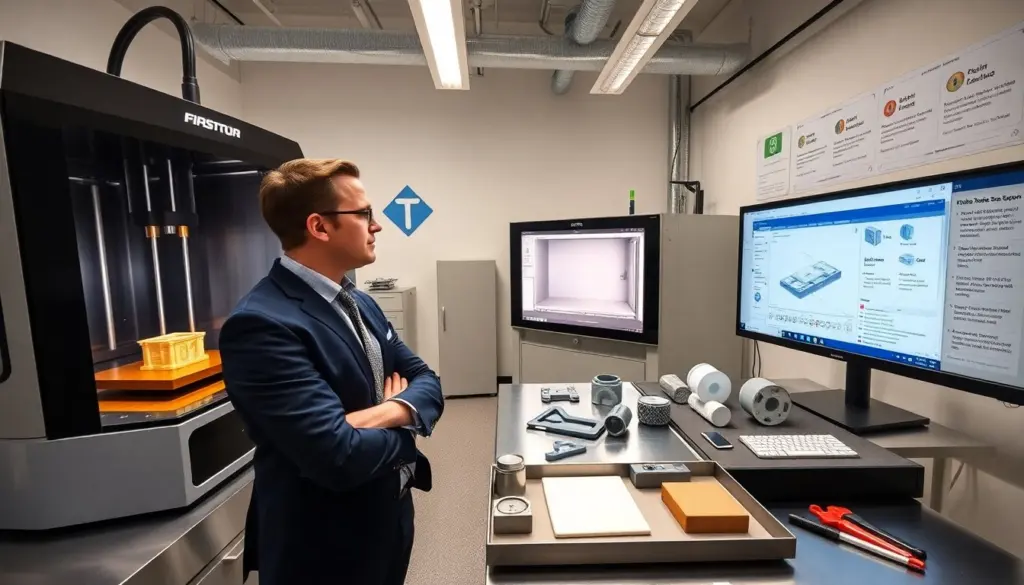
How does 3d printing work explains how machines build objects layer by layer from digital models. This guide shows core steps, main technologies, common materials, and practical tips. It helps readers decide when to print and what to expect. It uses clear examples and simple language. It avoids jargon and gives direct guidance for makers, engineers, and curious buyers.
Key Takeaways
- 3D printing works by building objects layer by layer directly from a digital model, enabling faster and less wasteful manufacturing than traditional methods.
- The process starts with a digital design, which is sliced into thin layers that guide the printer in depositing material precisely.
- Main 3D printing technologies include FDM, SLA, DLP, SLS, and metal sintering, each differing in speed, cost, and material compatibility.
- Common materials range from thermoplastics like PLA and ABS to resins and metals, with choices affecting strength and finish.
- Effective design involves considering material limits, part orientation, and support minimization to ensure print quality and functionality.
- 3D printing excels in rapid prototyping, custom tools, and complex parts, but users must choose suitable technology and materials to meet application needs.
What Is 3D Printing And How It Differs From Traditional Manufacturing
3D printing describes a process that builds objects by adding material in layers. It uses a digital file as a blueprint. Traditional manufacturing removes material from a block or uses molds to shape parts. 3D printing changes that by creating form directly from the file. This change gives designers more freedom. It reduces the need for tooling. It shortens the time from concept to part. It often lowers waste because printers add only the material they need. It also allows rapid iteration. A designer can update a file and print a new version the same day. Many industries use 3D printing for prototypes, fixtures, and end-use parts.
Core Steps Of The 3D Printing Process: From Design To Finished Part
A user starts with a digital model in CAD software. The designer saves the file in a standard format such as STL. A slicing program then converts the model into thin layers. The slicer creates toolpaths and sets printer parameters. The printer reads the sliced file and deposits material layer by layer. A printer heats, cures, or binds the material depending on the method. After printing, a technician removes the part from the build plate. The technician removes supports and performs post-processing steps such as sanding or heat treatment. For metal parts, the technician may perform sintering or hot isostatic pressing. Each step affects part strength, fit, and surface finish. Careful planning of design and settings improves the first-print success rate.
Main 3D Printing Technologies And How They Work
Fused Deposition Modeling (FDM) melts a thermoplastic and pushes it through a nozzle. The nozzle moves to lay down each layer. The part cools and hardens as layers stack. Stereolithography (SLA) uses a vat of liquid resin and a light source. The light cures resin where the model needs to form. Digital Light Processing (DLP) works like SLA but cures entire layers at once with a projector. Selective Laser Sintering (SLS) spreads a thin layer of powder and fuses areas with a laser. Direct Metal Laser Sintering (DMLS) or Laser Powder Bed Fusion (LPBF) uses a laser to fuse metal powder. Binder jetting binds powder using a liquid binder, then the part undergoes sintering. Each technology trades off cost, speed, resolution, and material choices.
Common Materials Used In 3D Printing And Their Properties
PLA and ABS are common thermoplastics for FDM printers. PLA prints easily and gives good detail. ABS gives better heat resistance and durability. PETG blends strength and ease of printing. Nylon offers toughness and wear resistance but absorbs moisture. Resin formulas vary: standard resins give high detail, engineering resins add strength, and dental resins meet biocompatibility. For metal printing, common alloys include stainless steel, tool steel, titanium, and aluminum. Metals give high strength and heat resistance but cost more. Powder materials for SLS include nylon powders and composite powders. TPU and other flexible filaments give rubber-like stretch. Material choice affects strength, surface finish, and required printer features like heated chambers or post-cure ovens.
Design Tips, Limitations, And Practical Applications To Know Before You Print
A designer keeps wall thicknesses within the material limits. A designer adds fillets at stress points to reduce cracks. A designer orients parts to minimize supports and improve surface quality. Small holes may fill in, so designers scale or drill them after printing. Designers also test fit with simple jigs before final prints. Common limitations include build volume, layer adhesion, and surface finish. High-precision parts may need machining after printing. Metal parts may require heat treatment to reach full strength. 3D printing suits rapid prototyping, custom tools, small production runs, and complex geometries like internal channels. Companies use it for medical models, aerospace brackets, custom consumer goods, and spare parts. People should match the technology and material to the end use to avoid surprises.