
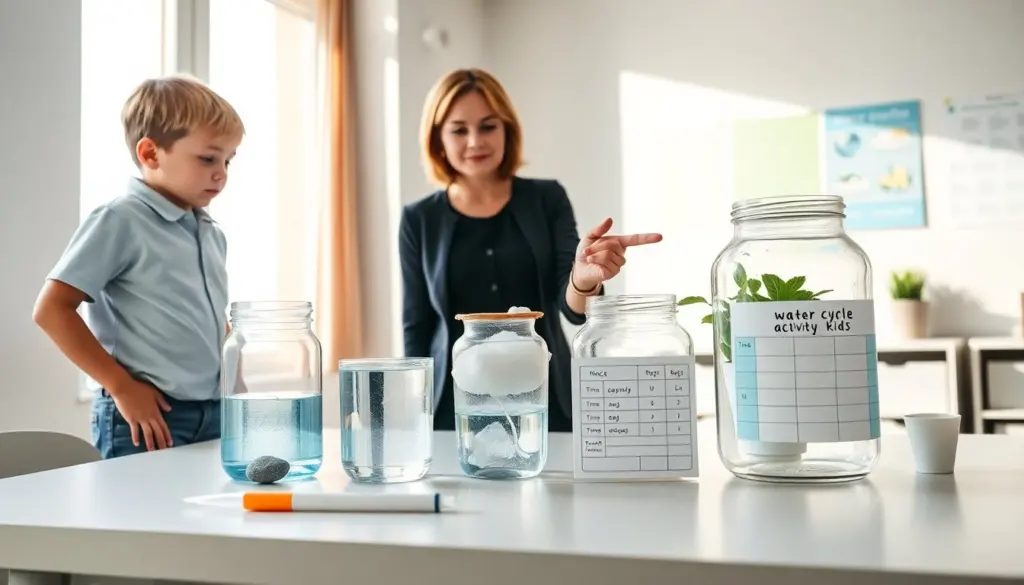
water cycle activity for kids gives children a direct way to see evaporation, condensation, and precipitation. Teachers and parents can use short experiments to show each step. The activities use safe materials and clear steps. They focus on play, observation, and simple recording. The child will touch, watch, and explain what they see.
Key Takeaways
- A water cycle activity for kids makes evaporation, condensation, and precipitation visible and easy to understand through hands-on experiments.
- The Evaporation In A Jar activity clearly demonstrates how heat causes water to change from liquid to gas and then condense, engaging kids with real-time observation.
- The Mini Water Cycle Bag shows condensation and precipitation by creating droplets in a sealed bag, linking these steps to natural weather phenomena.
- The Cloud In A Jar experiment helps children visualize cloud formation by cooling warm vapor, reinforcing the connection between vapor, cooling, and clouds.
- Using these water cycle activities for kids builds early science vocabulary, encourages prediction and explanation skills, and connects weather concepts to everyday life.
- Incorporate simple charts, drawings, and brief quizzes to enhance understanding and retention during these water cycle activities for kids.
Why Kids Should Learn The Water Cycle Early
Children learn best when they see cause and effect. A water cycle activity for kids turns abstract terms into visible events. The child sees water change state and moves through a simple system. Early lessons build science vocabulary. Early lessons also help kids link weather, plants, and daily life. Teachers can use story, drawing, and quick quizzes to check understanding. Short activities help retain attention. The child gains confidence when they explain what they observed.
Activity 1 — Evaporation In A Jar: What It Shows
This water cycle activity for kids shows evaporation and condensation in one view. The experiment shows how heat moves water from liquid to gas. The child watches water disappear and then reappear on the jar lid. The activity links sunlight, heat, and water loss. The child can predict and test how fast evaporation occurs. The simple setup makes the process clear and repeatable.
Materials And Setup For The Evaporation Jar
Materials: clear glass jar, warm water, small cup or pebble, plastic wrap, rubber band, marker. The adult fills the jar with warm water to one third. The small cup or pebble sits in the center to prevent the wrap from touching the water. The adult seals the jar with plastic wrap and secures it with a rubber band. The child places the jar in sunlight or under a lamp. The child marks the water level and watches every 10 minutes.
Activity 2 — Mini Water Cycle Bag: Watch Condensation And Precipitation
A water cycle activity for kids that uses a bag shows condensation and tiny rain. The adult adds a little water and food color to a zip-top bag. The child seals the bag and tapes it to a sunny window. The bag warms and water evaporates. The child sees droplets form and run down like rain. The activity links the bag view to clouds and rain. The child draws the bag scene and labels evaporation, condensation, and precipitation.
Activity 3 — Cloud In A Jar: A Simple Condensation Demo
This water cycle activity for kids makes a visible cloud in a jar. The adult warms water in a jar or pans for steam. They then pour the warm air into a larger jar. The adult sprays cold water on the lid or adds an ice pack on top. The change causes vapor to condense into a cloud. The child watches the cloud form and then fade. The adult asks: Where did the cloud come from? The child links vapor and cooling to cloud formation.
Teaching Tips, Extensions, And Simple Assessment Ideas
Begin with a short question to focus the child. Use the phrase water cycle activity for kids when introducing goals. Let the child predict outcomes before each step. Use a simple chart for observations: time, temp, droplets. For older children, measure temperature and compare trials. Extend the bag or jar task by adding soil and a plant to show transpiration. Assess with a quick draw-and-label task. Ask the child to explain one step in one sentence. Use praise and a small reward to reinforce accurate explanations.