
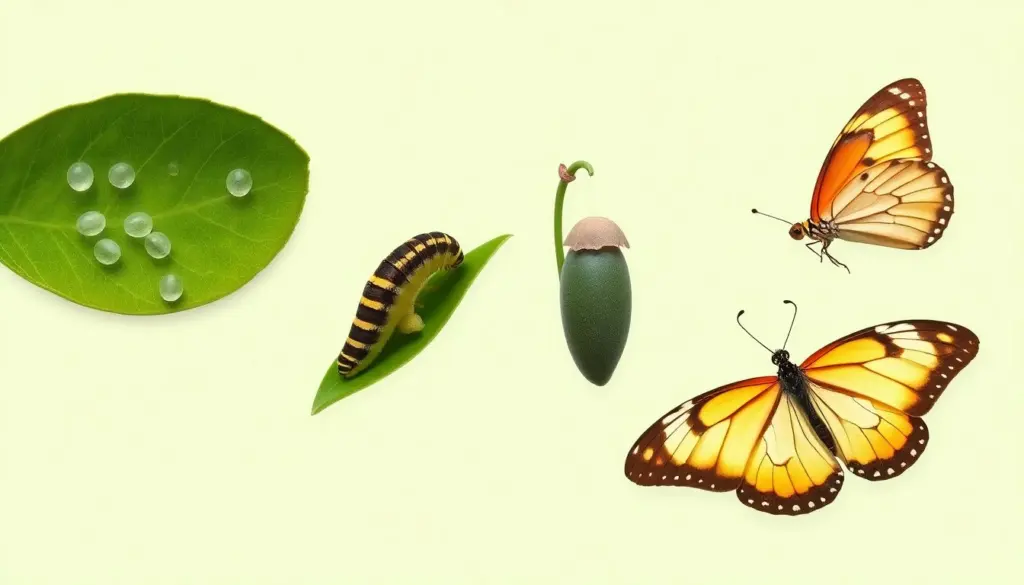
The life cycle of a butterfly explains how an insect changes form. This guide describes each stage clearly. It gives facts on eggs, caterpillars, pupae, and adults. The guide helps readers understand timing, behavior, and survival challenges. It keeps language simple and direct for easy use.
Key Takeaways
- The life cycle of a butterfly includes four main stages: egg, larva (caterpillar), pupa (chrysalis), and adult, each essential for development and survival.
- During the larva stage, caterpillars eat specific host plants and molt several times to grow quickly before pupating.
- Inside the chrysalis, metamorphosis transforms the caterpillar into an adult butterfly through tissue reorganization and wing formation.
- Adult butterflies emerge, dry their wings, mate, and contribute to pollination while selecting host plants to lay eggs, continuing the life cycle.
- Survival of butterflies is affected by predation, habitat loss, pesticide use, and climate change, so planting native host plants and avoiding harmful chemicals supports their population.
Egg Stage: How Life Begins On A Leaf
Eggs start the life cycle of a butterfly. A female lays eggs on a leaf that fits the larva diet. Each egg contains a single embryo. The embryo develops nutrients and forms a tiny caterpillar. Temperature and humidity affect development speed. Some species hatch in days. Other species wait weeks or months, especially in cool seasons. Predators eat many eggs. Parasites also target eggs. Leaf choice reduces those risks. The egg stage lasts until the caterpillar needs food and space to grow.
Larva (Caterpillar) Stage: Feeding, Molting, And Rapid Growth
The larva stage follows the egg stage in the life cycle of a butterfly. The caterpillar uses leaves for food and growth. It focuses on eating and storing energy. The body grows fast and the skin limits growth. The caterpillar sheds skin several times to allow size increase. This process shows clear stages called instars. The larva changes color and pattern as it grows. Predators attack caterpillars often. Caterpillars use camouflage, spines, or toxins to survive. They stop feeding when they prepare to form a chrysalis.
Feeding Behavior And Instars (Molts)
A caterpillar eats specific host plants during the life cycle of a butterfly. It chews leaves with strong jaws. Each instar lasts days to weeks. The caterpillar molts to increase body size. Molting removes old skin and reveals fresh growth. Growth rate depends on food quality and temperature. Some caterpillars pause growth when plants lack nutrients. Birds and wasps prey on caterpillars between molts. Chemical defenses or shelter reduce these losses. The feeding phase ends when the caterpillar finds a secure spot to pupate.
Pupa (Chrysalis) Stage: Transformation In A Protective Shell
The pupa stage follows the larva stage in the life cycle of a butterfly. The caterpillar forms a chrysalis that protects the body. The chrysalis attaches to a stem or leaf with silk. Inside the shell, tissues break down and rebuild. The pupa may darken as the wings form near the end. Environmental factors affect how long the pupa stage lasts. Some species enter a longer dormant state when conditions are harsh. Predators and parasites can still attack pupae. The chrysalis offers shelter and a controlled environment for change.
Metamorphosis Inside The Chrysalis
Metamorphosis completes the life cycle of a butterfly inside the chrysalis. Cells from the caterpillar dissolve and reorganize. Imaginal discs form the adult wings, legs, and antennae. The process uses stored fats and proteins from the larva. Hormones control the timing of tissue breakdown and growth. The pupa remains mostly still while organs form. Scientists study this stage to learn about cell development and regeneration. The final hours show rapid color and wing formation before the adult emerges.
Adult Butterfly: Emergence, Mating, And Lifespan
The adult stage completes the life cycle of a butterfly. The butterfly emerges from the chrysalis and pumps blood into the wings. It waits for wings to dry before it flies. The adult seeks nectar and mates. Males often patrol or display to find females. Females select host plants for egg laying. Adult lifespan varies by species and season. Some live a week. Others live several months, especially when they migrate or overwinter. Predation, weather, and food supply affect adult survival.
Reproduction, Pollination Role, And Factors That Affect Survival
Adults drive reproduction and pollination in the life cycle of a butterfly. They transfer pollen while they feed. This activity helps many flowering plants reproduce. Females lay eggs on plants that support caterpillar feeding. Habitat loss reduces available host plants and nectar sources. Pesticide use kills both larvae and adults. Climate shifts change the timing of life stages and food availability. Conservation actions can improve survival. People can plant native host plants and avoid broad-spectrum pesticides. Those actions increase local butterfly numbers and diversity.