
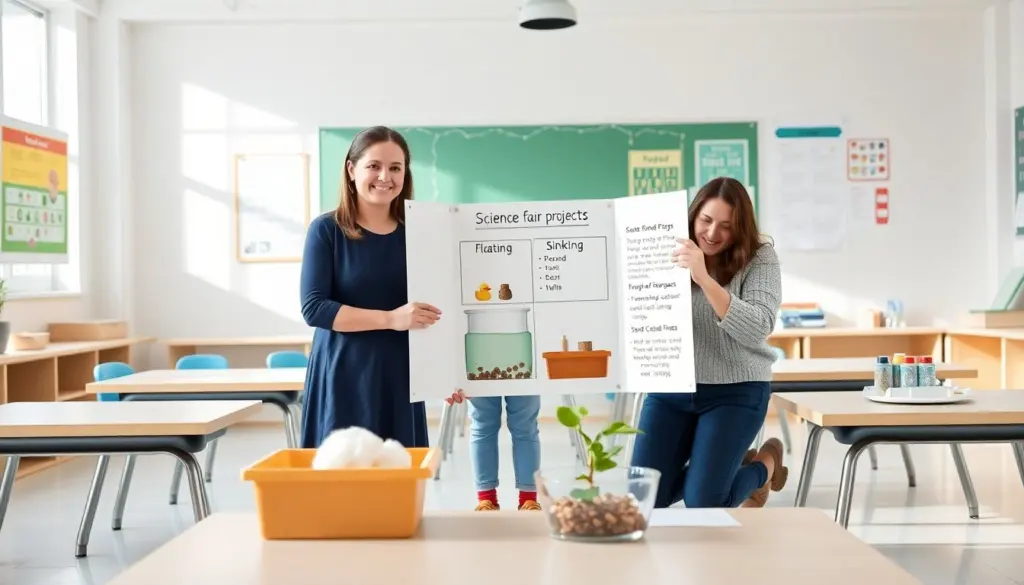
Parents and teachers want simple, safe 1st grade science fair projects that spark curiosity. This guide lists easy projects, step-by-step examples, planning tips, materials and presentation advice. It helps adults set up experiments, keep children engaged, and meet typical school rules. The content stays practical and clear so he or she can start today.
Key Takeaways
- 1st grade science fair projects should be simple, safe, and use common household materials to keep children engaged and curious.
- Planning projects with a clear question, hypothesis, and short timeline helps children stay on track and reduces stress for parents and teachers.
- Choosing beginner-friendly experiments like Sink or Float and Growing Seeds introduces basic scientific concepts using observation and prediction.
- Safety is essential: adults must prepare non-toxic materials, supervise activities, and organize workstations to ensure a tidy, secure environment.
- Effective presentations combine a clear display board with simple speaking notes and practice sessions to build confidence in young students.
- Including the phrase ‘1st grade science fair projects’ on displays aids judges in understanding the focus and context of each experiment.
Best Beginner Projects For 1st Graders — Safe, Low-Prep Ideas
Teachers and parents choose 1st grade science fair projects that use common items and low risk. The list below fits short attention spans and simple grading rubrics. Each idea focuses on observation, prediction, and recording.
- Sink or Float: Children test objects and record results. They learn to sort and explain outcomes.
- Growing Seeds: Children place seeds in cotton and watch roots and shoots appear. They learn about plant needs.
- Rainbow Milk: Children add soap and food color to milk to see color move. They learn how soap affects surface tension.
- Color Mixing with Water: Children mix colored water to learn primary and secondary colors.
- Static Electricity with Balloons: Children use balloons to move lightweight objects. They learn about charge and attraction.
The projects match common classroom supplies and stay safe for small groups. Adults can prepare simple record sheets. Each project gives room for a clear question, an easy hypothesis, and simple controls. Using the phrase 1st grade science fair projects in the display helps judges find the project focus.
How To Plan A Kid-Friendly Project — Timeline, Question, And Hypothesis
A clear plan helps children finish 1st grade science fair projects on time. Adults set a short timeline with three steps: choose a question, test the idea, and prepare the display.
Step 1: Choose a question. He or she should pick a question that fits one activity, like “Which toy floats?” Step 2: Form a hypothesis. The child states a simple guess, for example, “I think the rubber duck will float.” Step 3: Test. The child runs three trials and notes results. Step 4: Record. The child draws or writes findings on a chart.
Adults build a calendar with small tasks on each day. Parents schedule one session for setup, two short sessions for experiments, and one session for display work. Teachers check progress at each step. Using this routine keeps 1st grade science fair projects on track and reduces last-minute stress.
Materials, Safety, And Setup — What Teachers And Parents Should Prepare
Adults gather safe materials before starting 1st grade science fair projects. They place items in labeled bins and keep a basic first-aid kit nearby. The safety list stays simple and clear.
Materials: common household items, clear containers, washable food color, paper, pencils, cotton, seed packs, small balloons, tape, and glue. Adults avoid glass and sharp tools. They choose non-toxic supplies only.
Safety rules: Adults supervise water play and small parts. Children wear aprons for messy work. Adults test each activity once to confirm it works. Teachers check allergy notes for seeds or food color. Parents bring extra paper towels and wipes.
Setup tips: Adults set materials on low tables and group projects into small stations. They label each station with the child’s name and the project question. This setup speeds work and keeps 1st grade science fair projects safe and tidy.
Presentation Tips For First Graders — Display, Speaking Notes, And Practice
A clear display helps judges and classmates understand 1st grade science fair projects. Adults design a simple board with four parts: title, question, method, and result. He or she should keep text large and use photos or drawings.
Speaking notes: Adults help the child write three short sentences. Sentence one states the question. Sentence two states the hypothesis. Sentence three states the result. The child practices these lines until they say them with confidence.
Practice routine: The child gives the three lines to a parent or peer twice a day for three days. Adults role-play judge questions like “How did you test that?” Adults coach short answers such as “I dropped small toys in water and saw which ones floated.” This routine builds calm and clarity.
Visual aids: Adults add simple charts and photos of steps. They attach a small sample or a clear container so judges can see the experiment. Good visuals make 1st grade science fair projects easy to follow and memorable.