
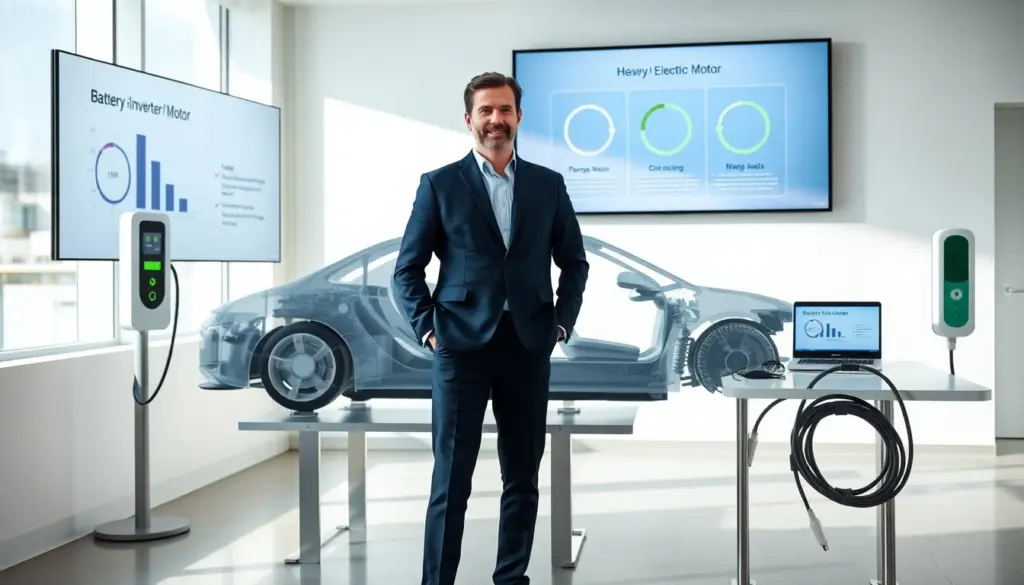
How do electric cars work is the key question buyers ask first. This guide explains batteries, motors, charging, and range in plain terms. It gives clear facts and real examples. It avoids jargon and keeps each point short. The reader will learn what moves an electric car, how energy flows, and what affects daily driving range.
Key Takeaways
- Electric cars work by storing electrical energy in battery packs and using electric motors to convert that energy into motion, making them more efficient than gas-powered cars.
- The battery management system in electric vehicles monitors and protects the battery to ensure safety and prolong its life, supporting daily driving range and performance.
- Charging an electric car involves various levels, from slow home charging to fast DC charging, and understanding charging options helps manage daily use and long trips effectively.
- Electric cars produce zero tailpipe emissions and feature regenerative braking, which recovers energy to extend driving range and reduce wear on brakes.
- Maintenance for electric vehicles is simpler and less frequent than for gasoline cars, with no oil changes needed and warranties often covering battery health for several years.
- Drivers can improve electric car efficiency by adopting steady speed, gentle acceleration, proper tire pressure, and planning routes, which extends range and reduces energy consumption.
How Electric Vehicles Differ From Gas-Powered Cars
Electric cars work by storing electrical energy and using it to turn wheels. Gas cars work by burning fuel to move pistons and turn wheels. Electric vehicles use one or two motors. Gas cars use an internal combustion engine and many moving parts. Electric vehicles have fewer moving parts. Gas cars need oil changes and complex cooling systems. Electric cars need battery maintenance and software updates.
Electric vehicles convert energy with higher efficiency. An electric motor converts roughly 85% of battery energy into motion. A typical gasoline engine converts about 25% of fuel energy into motion. This difference means electric cars use less energy per mile. Electric cars produce zero tailpipe emissions. Gas cars emit carbon dioxide and pollutants while running. Electric cars still cause some emissions at the power plant if the grid uses fossil fuels. Electric cars allow regenerative braking. Regenerative braking returns energy to the battery when the vehicle slows. That process extends range and reduces brake wear.
Buyers often ask how do electric cars work compared with hybrids. A hybrid mixes a small battery and a combustion engine. A plug-in hybrid stores more energy and can drive on electricity alone for short distances. A full battery electric vehicle runs only on electricity. Consumers who want simple drivetrains and lower running costs prefer full electric models.
Core Components Explained: Battery Packs, Electric Motors, And Power Electronics
A battery pack stores energy. The pack uses many cells arranged in modules. A battery management system monitors cell voltage, temperature, and state of charge. The management system protects the pack and prolongs life. Cells usually use lithium-ion chemistry. Manufacturers improve energy density each year. Engineers design packs with cooling plates, case structures, and crash protection.
An electric motor converts electricity into motion. The motor uses magnets and coils. When current flows, the motor creates torque and spins the shaft. Modern cars use permanent magnet motors or induction motors. Permanent magnet motors offer high efficiency at low speeds. Induction motors handle high power and cost less in rare-earth materials. Motor controllers pulse current and vary frequency to control speed.
Power electronics sit between the battery and motor. An inverter converts DC battery power to AC for the motor. A DC-DC converter steps high battery voltage down to 12V for accessories like lights and infotainment. Onboard chargers convert AC from the grid into DC to charge the battery. The car’s software coordinates all components. The software decides torque distribution, regenerative braking strength, and charging limits. Engineers calibrate software to protect the battery and maximize range.
People keep asking how do electric cars work at the component level. The short answer: battery stores, inverter converts, motor turns, and software manages. Each part must work together for safe and efficient driving.
Charging, Range, Efficiency, And Real-World Driving Factors
Charging moves energy from the grid to the battery. Level 1 charging uses a household outlet and supplies low power. Level 2 charging uses a 240V source and charges faster at home or work. DC fast charging supplies high power and restores range quickly on the road. Charging speed depends on the charger, the car’s onboard charger, and the battery’s current state of charge. Manufacturers limit charge rate to protect battery health.
Range depends on battery size, vehicle weight, and driving style. Higher battery capacity yields longer range. Heavy cars and fast driving reduce range. Cold weather lowers battery performance and reduces range. Using climate control also reduces range. Regenerative braking increases range in city driving. Highway driving often gives lower miles per kWh than city driving.
Efficiency measures how much energy the car uses per mile. Drivers can improve efficiency with steady speed, gentle acceleration, and planned routes. Keeping tires at correct pressure and removing excess drag also helps. Software updates can improve efficiency by refining motor control and thermal management.
Buyers ask how do electric cars work for daily use. They should plan charging like they plan fuel stops. Most drivers charge at home overnight and rarely use public fast chargers. Public chargers help on long trips. Apps show charger locations and availability. Charging networks differ in price and payment method.
Maintenance affects long-term costs. Electric cars need less routine maintenance. They do not need oil changes, timing belts, or complex transmissions. They need brake checks, cabin air filter changes, and occasional battery coolant service. Warranties commonly cover battery health for several years.
People curious about resale ask how do electric cars work with battery degradation. Batteries slowly lose capacity with time and use. Most modern packs retain most capacity for many years. Manufacturers provide data and warranties to guarantee minimum capacity levels.