
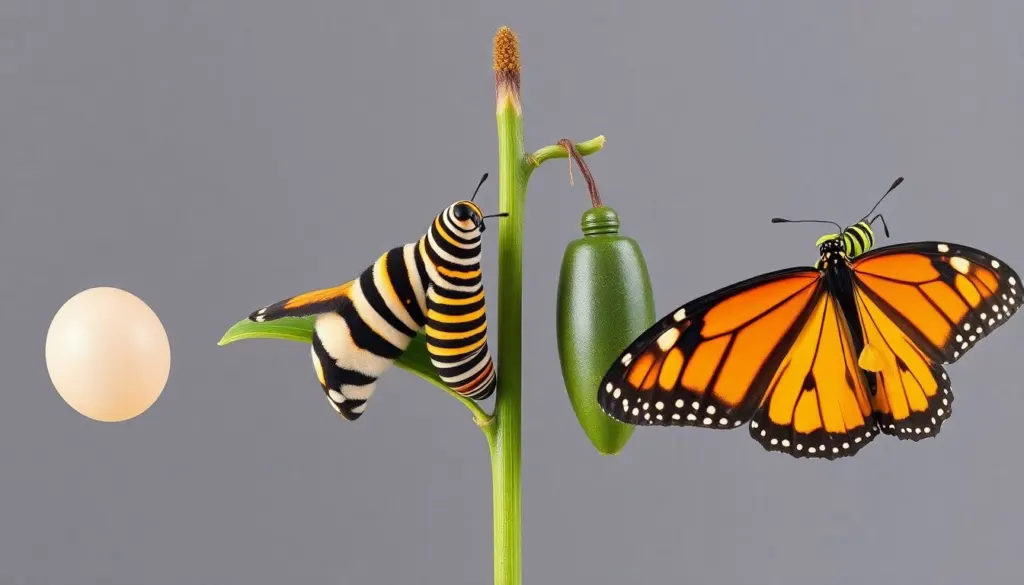
The life cycle of a monarch butterfly appears simple. It follows four clear stages: egg, caterpillar, chrysalis, and adult. This guide explains each stage in direct terms. It shows how the insect grows, changes, and prepares for migration. The writing uses plain sentences and precise facts. Readers will get clear steps and practical details about timing, food, and behavior for each stage.
Key Takeaways
- The life cycle of a monarch butterfly includes four distinct stages: egg, caterpillar, chrysalis, and adult, each critical for its development and migration.
- Monarch eggs are laid individually on milkweed leaves and hatch in 3 to 5 days, with temperature influencing incubation time.
- During the caterpillar stage, monarchs feed exclusively on milkweed, growing rapidly through five molts while storing chemical defenses for protection.
- The chrysalis stage lasts 10 to 14 days, during which the caterpillar transforms inside a protective green and gold casing before emerging as an adult.
- Adult monarch butterflies live 4 to 6 weeks in summer generations, but the migratory generation can live up to eight months to complete long-distance migration and reproduction.
- Monarch butterfly populations rely heavily on the availability of milkweed and nectar plants, as well as safe habitats for successful migration and lifecycle completion.
A Quick Overview Of The Monarch Life Cycle
The life cycle of a monarch butterfly runs through four stages. First, a female lays eggs on milkweed leaves. Second, eggs hatch into caterpillars that eat and grow. Third, caterpillars form a chrysalis and transform inside. Fourth, adults emerge, fly, and reproduce. The entire process often takes about four to six weeks for summer generations. One generation, the migratory generation, lives longer and completes the long fall migration. Each stage serves a clear purpose: growth, transformation, and reproduction.
Stage 1: Egg — Where It All Begins
A female monarch selects milkweed and lays a single egg on the leaf underside. The egg measures about 1.2 millimeters and looks like a tiny cream-colored dome. The egg stage lasts three to five days depending on temperature. Warmer conditions shorten the time and cooler conditions lengthen it. The egg contains a developing embryo that feeds on yolk. Once the caterpillar is ready, it chews a small hole and exits the egg. Survival depends on correct host plant choice and low predation.
Stage 2: Caterpillar (Larva)
The caterpillar stage focuses on rapid growth. After leaving the egg, the larva eats its eggshell and then begins feeding on milkweed leaves. The caterpillar passes through five growth phases called instars. Each instar ends with a molt when the caterpillar sheds its old skin. The larva stores energy and builds body mass during this stage. Predators, parasitic flies, and plant chemistry affect survival. The caterpillar stage usually lasts about 10 to 14 days before the insect looks for a site to pupate.
Diet, Growth, And Molting During The Caterpillar Stage
A monarch caterpillar uses milkweed as its only food source. The plant supplies cardiac glycosides that the caterpillar stores and that make it unpalatable to many predators. The caterpillar eats voraciously and doubles or triples its weight between molts. Each molt gives the caterpillar a larger exoskeleton and more room to grow. The caterpillar also changes color and stripe definition across instars. Healthy milkweed and warm weather speed growth. If food runs short, the caterpillar delays pupation and may suffer higher mortality.
Stage 3: Chrysalis (Pupa)
The caterpillar finds a sheltered spot and attaches by silk to form a J-shape. It sheds its final larval skin to reveal the chrysalis. The chrysalis starts green with gold spots. The pupa stage serves as a protective container for internal change. The pupal stage lasts about 10 to 14 days for summer generations. The chrysalis hardens and masks the changes inside. Predators and parasitic organisms can still attack the chrysalis. Weather extremes and habitat loss also reduce the number of adults that emerge.
Stage 4: Adult Monarchs — Migration, Reproduction, And Lifespan
An adult monarch emerges with full wings and bright orange and black patterns. The adult feeds on nectar and mates. Summer adults live about four to six weeks and complete several breeding cycles. The fall generation, called the migratory generation, lives longer, up to eight months, and flies to overwintering sites. Adults use a sun compass and hereditary cues to orient on long migration routes. After winter, they return north and start reproduction. Population health depends on milkweed availability, nectar sources, and safe stopover habitat.