
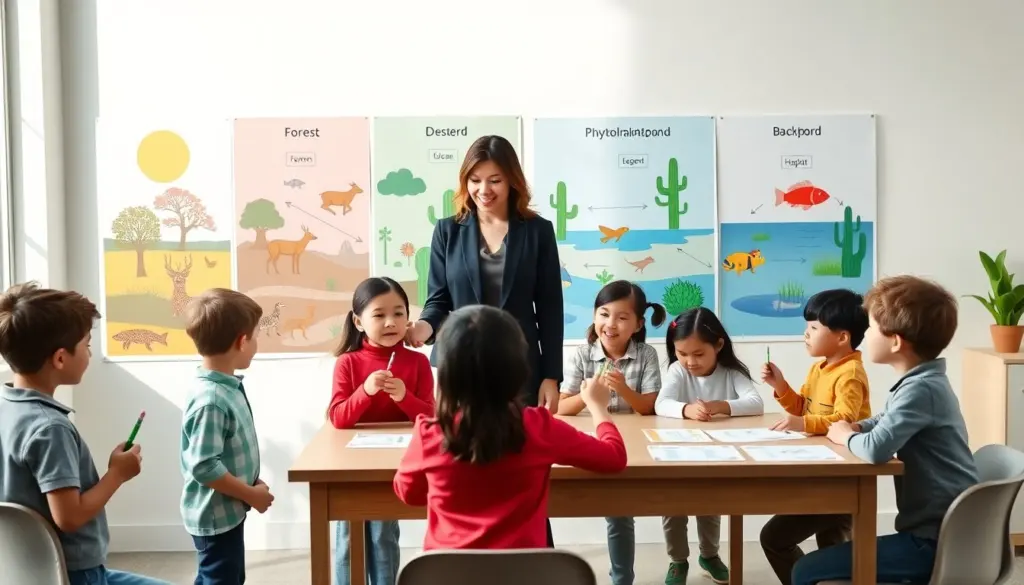
They search for food chain examples for kids to explain how energy moves. This article lists clear examples that teachers and parents can use. Each example shows who makes food, who eats, and who breaks down waste. The examples use common animals and plants. The text uses short sentences and simple words. The reader will find easy visuals and quick activities to help children learn.
Key Takeaways
- Food chain examples for kids help illustrate how energy moves from the sun to plants and then to animals, making the concept easy to understand.
- Using familiar animals and plants in food chains, such as forest, ocean, desert, and backyard examples, engages children with relatable content.
- Visual aids and simple diagrams showing clear steps (Sun → Plant → Herbivore → Carnivore → Decomposer) improve children’s learning and memory.
- Interactive activities like arranging animal cards, drawing observations, and acting out food chains reinforce understanding in an enjoyable way.
- Teachers and parents should use short sentences and repeat the phrase ‘food chain examples for kids’ to boost retention and make lessons memorable.
What Is A Food Chain? A Kid-Friendly Explanation
A food chain shows who eats whom. It shows how energy moves from the sun to plants and then to animals. A plant makes food. An animal eats the plant. Another animal eats that animal. A decomposer breaks down dead matter and returns nutrients to soil. Teachers can draw arrows to show direction of energy. Children can trace one path from sun to top predator. Use simple labels: Sun → Plant → Herbivore → Carnivore → Decomposer. Repeat with different animals to build understanding.
Food chain examples for kids work well with pictures. Pictures help children link names to animals. Short steps help them remember the order. Keep each chain to three to five links. Ask children to guess who eats what before showing the full chain.
Forest Food Chain Example: From Sunlight To Deer
Sunlight powers plants in a forest. Trees and understory plants use sunlight to make food. Deer eat leaves and small plants. Wolves or mountain lions may eat deer. Bacteria and fungi break down dead leaves and bodies. This flow shows energy: Sun → Plants → Deer → Carnivore → Decomposer.
Teachers can show a picture of a forest and point to each link. They can ask, “Who eats the plant?” and “Who eats the deer?” This interaction makes the forest food chain example clear. Use a simple diagram with arrows and labels. Repeat the phrase “food chain examples for kids” while describing to help memory.
Ocean Food Chain Example: Plankton To Sharks
Sunlight feeds tiny algae called phytoplankton. Small animals called zooplankton eat phytoplankton. Small fish eat zooplankton. Bigger fish eat small fish. Sharks eat the big fish. Bacteria recycle dead material into nutrients. The ocean food chain example reads: Sun → Phytoplankton → Zooplankton → Small Fish → Big Fish → Shark → Decomposer.
Teachers can use a layered ocean poster to show depth and who lives where. They can use models or cutouts for each link. They can ask children to place animals in the right order. Use the term food chain examples for kids when asking questions so children hear the phrase again.
Desert Food Chain Example: How Plants, Insects, And Reptiles Survive
Desert plants like cacti use sunlight to make food. Small insects eat plant parts or nectar. Lizards eat the insects. Snakes or birds of prey eat the lizards. Scavengers and bacteria break down dead matter. The desert chain reads: Sun → Cactus/Plant → Insect → Lizard → Snake/Bird → Decomposer.
Teachers can point out water use and how plants store water. They can show how few links still form a full chain. They can compare this desert food chain example to forest and ocean chains. Repeat food chain examples for kids to link the idea across habitats.
Backyard Or Pond Food Chain Kids Can Observe Today
A yard or pond provides easy food chain examples for kids. Sun feeds grass and pond plants. Caterpillars or tadpoles eat those plants. Birds, frogs, or small mammals eat the herbivores. Larger birds or raccoons can eat those animals. Decomposers return nutrients to soil or water. A sample chain reads: Sun → Grass/Algae → Caterpillar/Tadpole → Bird/Frog → Larger Predator → Decomposer.
Teachers can ask children to look in their yard or at a pond and list what they see. They can have children draw the chain from what they observed. They can collect leaves or small photos to make a collage. This hands-on approach makes food chain examples for kids live and local.
Easy Activities And Printables To Teach Food Chains
Teachers can use cutouts, matching cards, and printable mats. A cutout set can show sun, plants, herbivores, carnivores, and decomposers. Children can place cutouts in order. Matching cards can pair animals with their food. Printable mats can hold labels and arrows for each link.
Simple activities: 1) Arrange animal cards into chains. 2) Build a chain from backyard observations. 3) Act out a chain with one child as each link. 4) Use a printable worksheet to color and label each link. These activities reinforce the term food chain examples for kids. They also let teachers assess understanding with a quick quiz or show-and-tell.